Heat.net Store Home
|
1916 WWI Russia AR Receipt Card Russo-Asiatic Bank Petrograd to Orel Kagan 10k For Sale

When you click on links to various merchants on this site and make a purchase, this can result in this site earning a commission. Affiliate programs and affiliations include, but are not limited to, the eBay Partner Network.

1916 WWI Russia AR Receipt Card Russo-Asiatic Bank Petrograd to Orel Kagan 10k:
$135.00
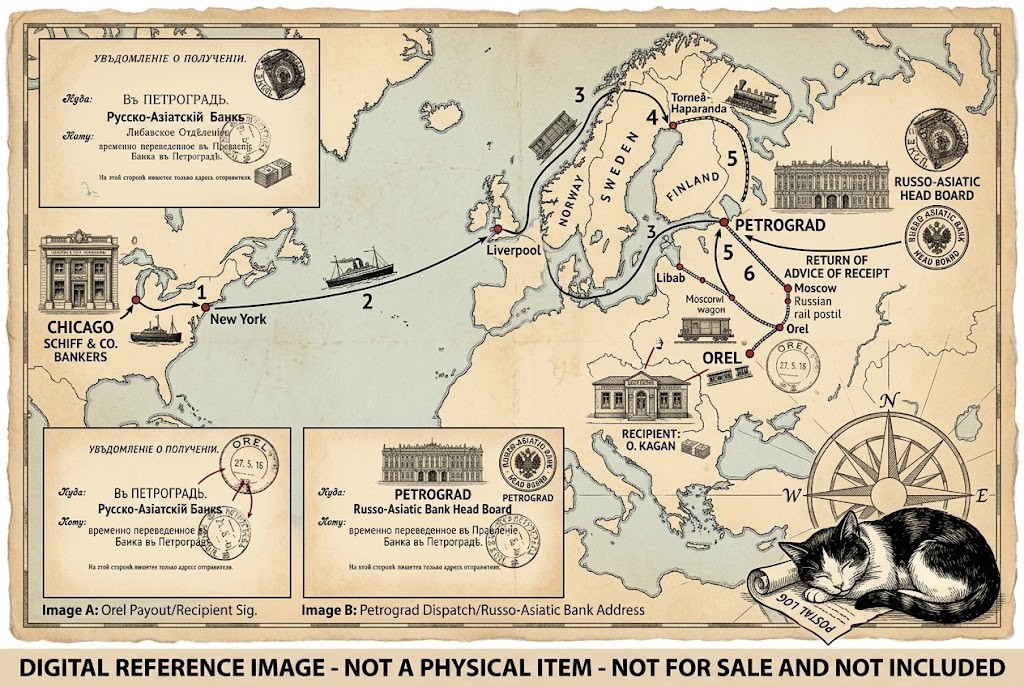
⚠️ IMPORTANT NOTE REGARDING EXHIBIT GRAPHICS: The historical routing maps, geographic overlays, and enhanced composite visuals featured in this listing are custom-designed digital graphics created exclusively for this online presentation. They are intended to provide deep provenance and tell the social history of the cover. No physical prints or digital files are included with the purchase of the physical philatelic item unless explicitly stated.\"Digital Exhibit Graphic Only – Not Included in Purchase, but you are more than welcome to download the images directly from and print them out for your records!\" Item Description Historical OverviewA scarce and historically rich Imperial Russian Advice of Receipt (Увѣдомленіе о полученіи / Avis de Réception) postal stationery card issued during World War I. This card served as proof of delivery and payment for an international financial remittance of 200 Rubles forwarded to an interior city during the height of the Great War and the Baltic refugee crisis. Key Features & Postal Details Postal Stationery / Franking: Imperial Russian 10 kopeck imprinted postal indicia in dark blue featuring the Romanov double-headed eagle and crossed post horns, paying the standard domestic return receipt fee. Dispatch Marking: Struck with a sharp circular datestamp reading ПЕТРОГРАДЪ ЭКСП. (Petrograd Expedition / Sorting Office) dated 21. 5. 16 (May 21, 1916, Julian calendar). Delivery & Payout Marking: Struck on the reverse with a clear receiving circular datestamp ОРЕЛЪ (Orel) dated 27. 5. 16 (May 27, 1916). Originating Chicago Handstamp: Faint purple oval cachet at the lower-left: SCHIFF & CO. / CHICAGO (Schiff & Co. Bankers, a noted Maxwell Street Chicago financial house specializing in immigrant remittances to Eastern Europe and the Russian Empire). Pre-Printed Sender Line: Addressed to the prominent Russo-Asiatic Bank (Русско-Азіатскій Банкъ) in Petrograd for its Libau Branch (Либавское Отдѣленіе). The printed line specifically notes: временно переведенное въ Правленіе Банка въ Петроградѣ (\"temporarily transferred to the Bank Board in Petrograd\"), documenting the wartime branch evacuation following the German capture of Libau (Liepāja, Latvia) in May 1915. Recipient & Transmission: Issued for postal money transfer (Почтовый переводъ) No. 8065 (remittance docket 400469) to Orel for the sum of 200 Rubles (руб. 200 -), personally signed upon receipt by O. Kagan (О. Каганъ).
Value Factors Mail Route & Operational Handling Originating Remittance Leg (Chicago to Petrograd): The transfer advisory/draft was dispatched across the North Atlantic via steamship to neutral Britain/Scandinavia, then forwarded into the Russian Empire across the neutral Finnish transit border (Torneå–Haparanda route, the primary wartime surface pipeline into Russia).
Domestic Outbound Leg (Petrograd to Orel): Arrival, Payout & Delivery Leg (Orel): May 27, 1916 (Julian): Received at the central post office in Orel (Орелъ), struck with the receiving circular datestamp ОРЕЛЪ 27. 5. 16 (6 days transit from Petrograd). Payout of 200 Rubles completed in person to recipient O. Kagan (О. Каганъ), who signed the card under Получено лично (\"Received in person\").
Return Leg (Orel back to Petrograd): Once countersigned and dated by postal clerks in Orel, the completed card functioned as official post-office delivery proof and was sent back north via rail to Petrograd as an ordinary registered return card, delivering directly to the Russo-Asiatic Bank.
Sender Background: Financial Channel & Wartime Displacement Originating U.S. Remitter (Schiff & Co., Chicago): Founded in Chicago\'s Maxwell Street Jewish immigrant enclave, Schiff & Co. specialized in foreign exchange, passenger steamship bookings, and transatlantic remittances. They served thousands of Eastern European and Jewish immigrants sending survival money back to families remaining inside the Russian Empire. Domestic Forwarding Agent (Russo-Asiatic Bank / Русско-Азіатскій Банкъ): The largest privately owned commercial joint-stock bank in pre-revolutionary Russia, heavily financed by French and Russian capital. It served as a primary correspondent bank handling overseas wire transfers and international drafts inside the Empire. The Libau Evacuation: The card specifically notes the sender as the Libau Branch, temporarily relocated to the Head Board in Petrograd. Libau (now Liepāja, Latvia) was the Russian Empire\'s key ice-free Baltic port and a premier departure hub for transatlantic emigrants via the Russian American Line. In early May 1915, the Imperial German Army overran Courland and captured Libau. The bank evacuated its records, funds, and key personnel to the capital (Petrograd) just ahead of the occupation, operating as an exiled branch to liquidate accounts and process pending money transfers.
Receiver Background: Payout in Orel Recipient (O. Kagan / О. Каганъ): \"Kagan\" (a variant of Cohen) was a common Jewish surname in the Russian Empire. The recipient received 200 rubles—a substantial financial sum during wartime inflation—personally signing the receipt (Получено лично: О. Каганъ). Payout City (Orel / Орелъ): Located roughly 360 km south-southwest of Moscow, Orel sat well outside the Pale of Settlement (the western border territories to which Imperial law restricted Jewish residency).
Country & Historical Context (May 1916) WWI Baltic Front & Refugee Crisis: By mid-1916, the Russian Empire was in crisis following the \"Great Retreat\" of 1915, which lost Poland, Lithuania, and parts of Latvia (including Libau) to Imperial Germany. The Russian military command forcibly expelled hundreds of thousands of Jewish and Baltic inhabitants eastward toward central Russian cities like Orel, suspecting them of disloyalty or removing them from active combat zones. Easing of Settlement Restrictions: Due to the deluge of wartime refugees from the Western Front, the Imperial government temporarily relaxed strict Pale of Settlement enforcement in August 1915, permitting displaced Jewish families to reside in interior towns like Orel. The Postal Transfer Lifeline: Wartime embargoes, severed telegraph cables across Central Europe, and German submarine activity disrupted standard civilian post. Overseas funds from emigrants in cities like Chicago had to route through neutral Scandinavian conduits, convert into Imperial rubles at major institutions like the Russo-Asiatic Bank, and disperse through the Imperial postal money order system (Почтовый переводъ) to support displaced relatives. Twilight of the Empire: The card is dated May 1916 (Julian calendar), less than nine months before the February Revolution of 1917 toppled the Romanov dynasty and eighteen months before the Bolshevik nationalization liquidated the Russo-Asiatic Bank.
Stamp & Postal Stationery Details Card Type: Russian Imperial Advice of Receipt / Return Receipt (Увѣдомленіе о полученіи / Avis de Réception / AR) postal stationery card. It was designed specifically to accompany registered dispatches, insured letters, or postal money transfers and return to the sender upon payout. Imprinted Stamp (Indicia): 10 kopecks (10 коп.), printed in dark blue. Design: Imperial Russian Arms design (Crowned Double-Headed Eagle above crossed post horns) set in a circular medallion, flanked by Roman numerals \"X\" and inscribed ДЕСЯТЬ КОПѢЕКЪ (Ten Kopecks). Postal Rate: 10 kopecks represented the standard domestic intercity Return Receipt / AR fee set by the Russian Imperial Post for tracking delivery of valuable items and money transfers.
Card Usage & Transmission Details Primary Function: Receipt of delivery for a postal money order (Почтовый переводъ) of 200 Rubles (руб. 200 -), originating from Chicago via banking remittance networks and processed through the Russian domestic postal transfer system (receipt control number 8065 / dispatch docket 400469). Originating / Ordering Party Handstamp: Faint purple oval handstamp at bottom-left: SCHIFF & CO. / CHICAGO (Schiff & Co. Bankers, a prominent Chicago bank handling remittances and draft dispatches for Eastern European and Jewish immigrants sending funds to family in the Russian Empire). Sender / Destination: Pre-printed address to Petrograd (Въ ПЕТРОГРАДЪ), directed to the head office of the Russo-Asiatic Bank (Русско-Азіатскій Банкъ), specifically handling business for its Libau Branch (Либавское Отдѣленіе). Wartime Evacuation Line: The printed note reads: временно переведенное въ Правленіе Банка въ Петроградѣ (\"temporarily transferred to the Bank Board in Petrograd\"). The Libau (Liepāja, Latvia) branch had to be evacuated and managed from Petrograd following the May 1915 German capture and occupation of Courland/Libau. Recipient & Payout Location: Addressed to Orel (въ Орелъ) to recipient O. Kagan (О. Каганъ). Delivery Confirmation: Signed directly by the recipient (Получено лично: О. / Офикръ Каганъ).
Postal Markings Petrograd Dispatch Postmark: Circular datestamp canceling the 10k stamp reading ПЕТРОГРАДЪ ЭКСП. (Petrograd Expedition / Sorting Office), dated 21. 5. 16 (May 21, 1916, Julian calendar). Orel Payout / Delivery Postmark: Circular receiving datestamp in the bottom right corner reading ОРЕЛЪ (Orel), dated 27. 5. 16 (May 27, 1916).
⚠️ IMPORTANT NOTE REGARDING EXHIBIT GRAPHICS: The historical routing maps, geographic overlays, and enhanced composite visuals featured in this listing are custom-designed digital graphics created exclusively for this online presentation. They are intended to provide deep provenance and tell the social history of the cover. No physical prints or digital files are included with the purchase of the physical philatelic item unless explicitly stated.\"Digital Exhibit Graphic Only – Not Included in Purchase, but you are more than welcome to download the images directly from and print them out for your records!\" Get your own free counter at Auctiva Try Auctiva free for 30 days, no credit card required
|
|
Other Related Items:
Related Items: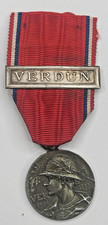
1916 WWI VERDUN MEDAL w/BAR 30mm PRUDHOMME VERSION $95.00
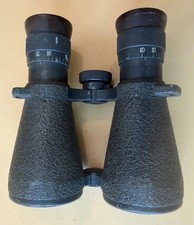
Genuine Antique 1916 WWI German Carl Zeiss Jena Fernglas 08 Binoculars & Case $225.00
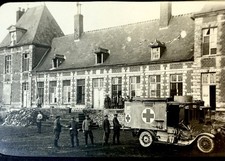
WWI Photograph Album From 1916-1917 With 70 Postcard-sized Images $274.00
|