When you click on links to various merchants on this site and make a purchase, this can result in this site earning a commission. Affiliate programs and affiliations include, but are not limited to, the eBay Partner Network.
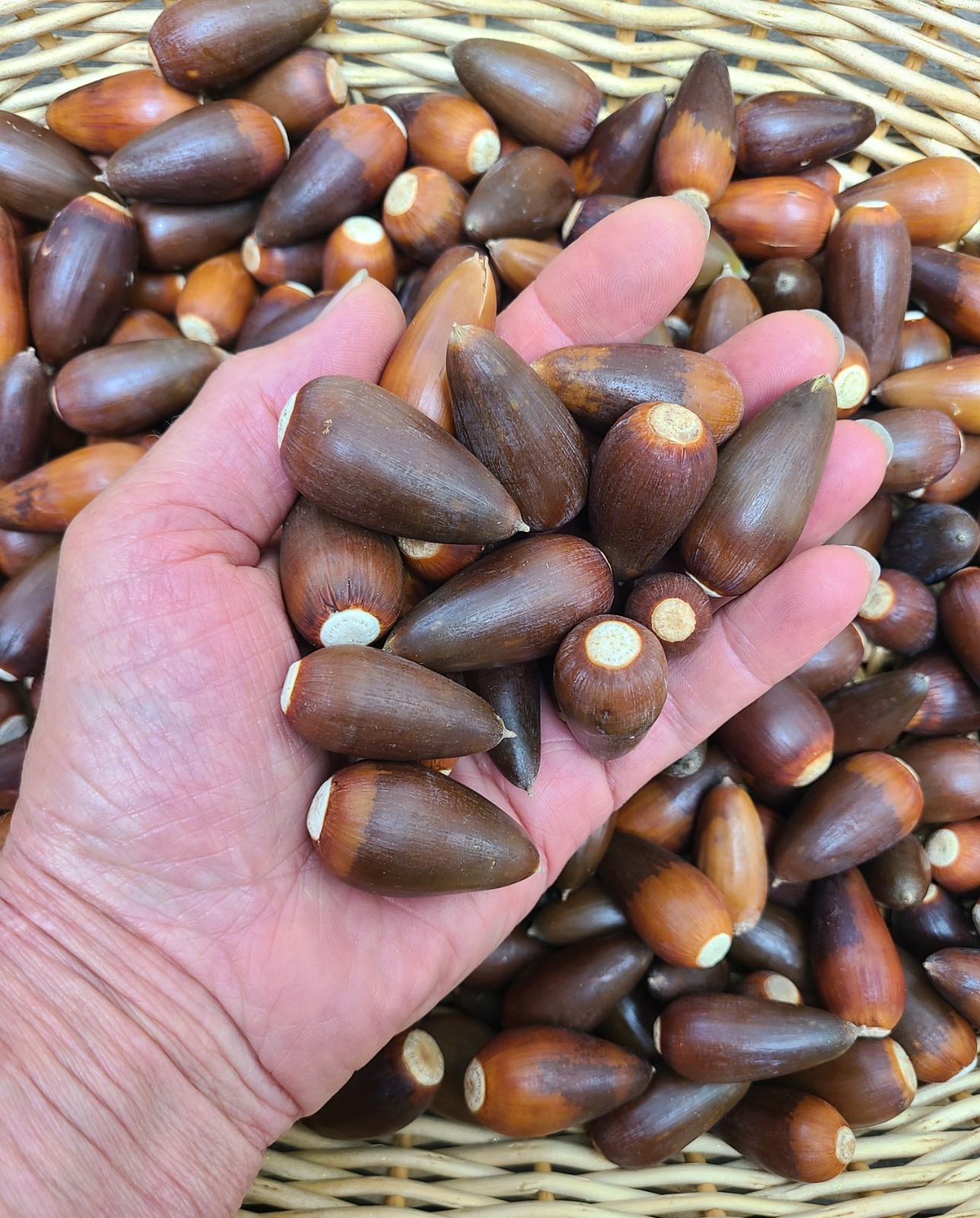
(15-20=Approximately 8 ounces of acorns!)
Shipped securely via USPS!
Just $20. with shipping included!
(Available while supplies last or through end of year!)
Thanks for looking!
For more Information & References:
A Brief History and Guide to California’s Native Oaks — Our City Forest
“Oak trees belong to the genus Quercus meaning “fine tree” in Latin. They are native to the northern hemisphere and consist of some 600 species. Oak trees are unique because of their fruit the acorn, which is key in identifying oak species. They are known for being multi-trunked and growing wide canopies with sprawling, scraggly branches.”Oaks in Napa County
Jake Ruygt and Joe Callizo
“Among the most stately of trees is the Valley Oak (Quercus Lobata). It is considered to be one of the largest oak species in the world. This is a deciduous tree (losing all its leaves for the winter) of grasslands and woodlands, including streamside borders. It is still common in the Napa Valley, but can be better appreciated in its natural setting in less developed areas like Pope ands Capell Valleys. Its leaves are characteristically deep-cleft, blunt-lobed, and dark green on their upper surfaces.”Four Common Oaks in Napa County
Napa County RCD
Leaf:Alternate, simple, and deciduous; 2 to 4 inches long; margins typically have 9 to 11 deep, rounded lobes;
dull green and often pubescent above, and pale green below.
Flower:Monoecious; male flowers in pendent yellow-green catkins ~ 1 to 2 inches long; female flowers are
small, solitary or in clusters of 2-3, and occur in the leaf axils on current year’s twigs; appearing in spring.
Fruit:Acorns; shape varies greatly but is usually conical or bullet-shaped; 1 to 2 inches long; caps may beshallow or deep and often have warty knobs; ripen in a single year.
Twig:Slender; gray-brown to brown; pubescent when young but smooth by second year; often bear thespherical galls of native wasps.
Bark:Younger bark is thin (up to 1 inch), gray, and checkered or shallowly fissured; older bark is darker gray,several inches thick, and deeply fissured with flattened ridges.
Form:Large deciduous tree with massive limbs, rounded &spreading crown; branches droop to ground.From Tiny Acorns to Mighty Oaks: Rebuilding Oak Woodlands in the Napa Valley
Oaks are a keystone species that can help preserve our watershed
Napa County Library “H2O Heros”
“Before the land was cleared for orchards and vineyards, stands of oak trees dominated the valley’s landscape.Blanketing the foothills and shading riparian landscapes,oaks are an iconic part of the Napa Valley image.Napa Valley has the greatest density of oaks of any other county in California: thirty-three percent of the county is covered by oak woodlands. Four species of oak are most common in Napa Valley: Valley oak (Quercus lobata), Coast Live oak (Quercus agrifolia), California Black oak (Quercus kelloggii), and Blue oak (Quercus douglasii). These trees have evolved to adapt to the hot, dry seasons of California, requiring little water once established in cycles of drought. Resilient in fires, thick bark protects the trees from low-intensity and medium-intensity burns and their ability to sprout new growth from the base of their trunks helps them rebound from the ashes. Less in-tense fires can actually promote oak survival by increasing the availability of nutrients in the soil and killing harmful pathogens. For many years, indigenous people such as the Wappo of Napa Valley used fire to manage oak woodlands. Prescribed (purposefully ignited) grass fires help the oaks thrive and decreases the chances of larger, more destructive fires occurring. Fire can also improve the vitality of the oaks, creating higher yields of acorns.”UCLA Led-Study Finds One of California’s Iconic Tree Species Offers Lessons for Conservation
David Colgan
“The Valley Oak is the largest in California; it grows to over 100 feet tall, and has dark green leaves and a deeply grooved trunk. It is considered a foundational species because it provides a habitat and food for a variety of animals, including squirrels, deer, birds and insects. In parts of the state, it is one of the only species of trees that exists. Valley oaks provide benefits to humans too, filtering water and providing shady places to escape the heat.”Valley Oak, Quercus Lobata Natural Shape“The lobatas’ ancestors once covered the region’s valley floors and gave the grasslands a park-like feel, partly due to the management style of the native people, who used the acorns for their protein nourishment. It is in the white oak family and the leaves have the beloved classic oak shape. This majestic native will send a root deep into the ground to find water. It is sometimes called the water oak and would like some help with moisture in the summer or in a drought. It’s a fast growing tree in the Valley. These graceful deciduous trees provide wonderful habitat and summer shade, straight and erect for the first decades and then more spreading with age, with limbs picturesquely twisted”