When you click on links to various merchants on this site and make a purchase, this can result in this site earning a commission. Affiliate programs and affiliations include, but are not limited to, the eBay Partner Network.
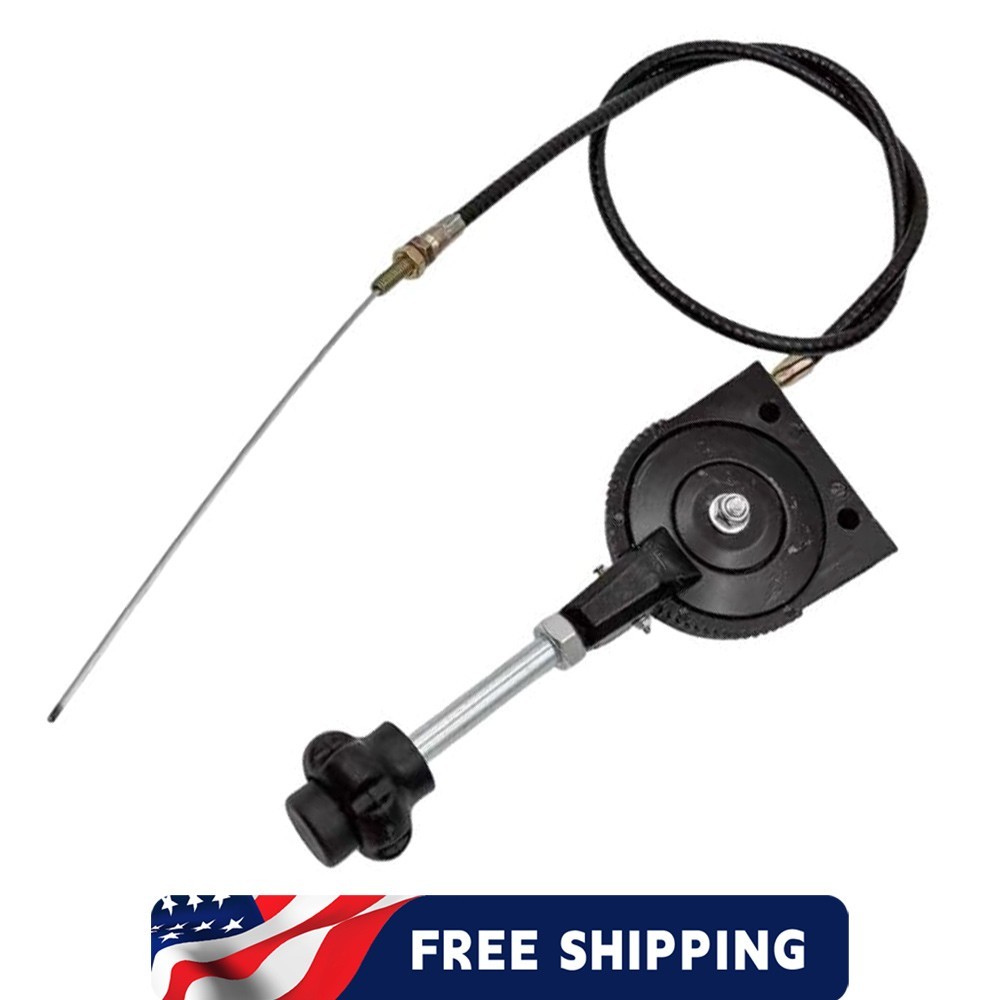
Core features of throttle cableThe throttle cable (accelerator cable), as a classic mechanical control component, can be summarized into the following main characteristics:Mechanical direct, intuitive responseFeatures: The pedal is directly physically connected to the throttle valve through steel wire, and the pedal force and stroke correspond linearly with the throttle valve opening. Direct foot feel, strong handling sensation, and the driver can obtain the most intuitive mechanical response.Simple structure and low costFeatures: Mainly composed of steel wire core, metal joint, wear-resistant nylon or rubber sheath, with a simple structure. This makes its production cost and subsequent maintenance and replacement costs relatively low.High reliability, easy to identify faultsCharacteristics: Under normal use and regular maintenance, its mechanical structure is very reliable and durable. The common faults (such as jamming and breakage) are obvious, easy to diagnose, and the maintenance technology is mature.Regular maintenance is requiredCharacteristics: As a mechanical component, there are issues of wear and aging. It is necessary to regularly check for damaged sheaths and rusted steel wires, and lubricate them in a timely manner to ensure their smoothness and normal operation. This is a major difference between it and electronic throttle.High environmental adaptability requirementsFeatures: The material must be able to withstand the high temperature of the engine compartment, and the sheath must have good corrosion resistance and aging resistance to cope with the harsh environment such as rain and dust.In summary, the characteristics of the throttle cable are: mechanical, direct, simple, reliable, and low-cost, but it requires regular maintenance. With the development of automotive technology, it is gradually being replaced by electronic throttle, but it is still the mainstream configuration on many old models, motorcycles, and commercial vehicles.
On May 29, 2026 at 10:26:15 PDT, seller added the following information: