When you click on links to various merchants on this site and make a purchase, this can result in this site earning a commission. Affiliate programs and affiliations include, but are not limited to, the eBay Partner Network.
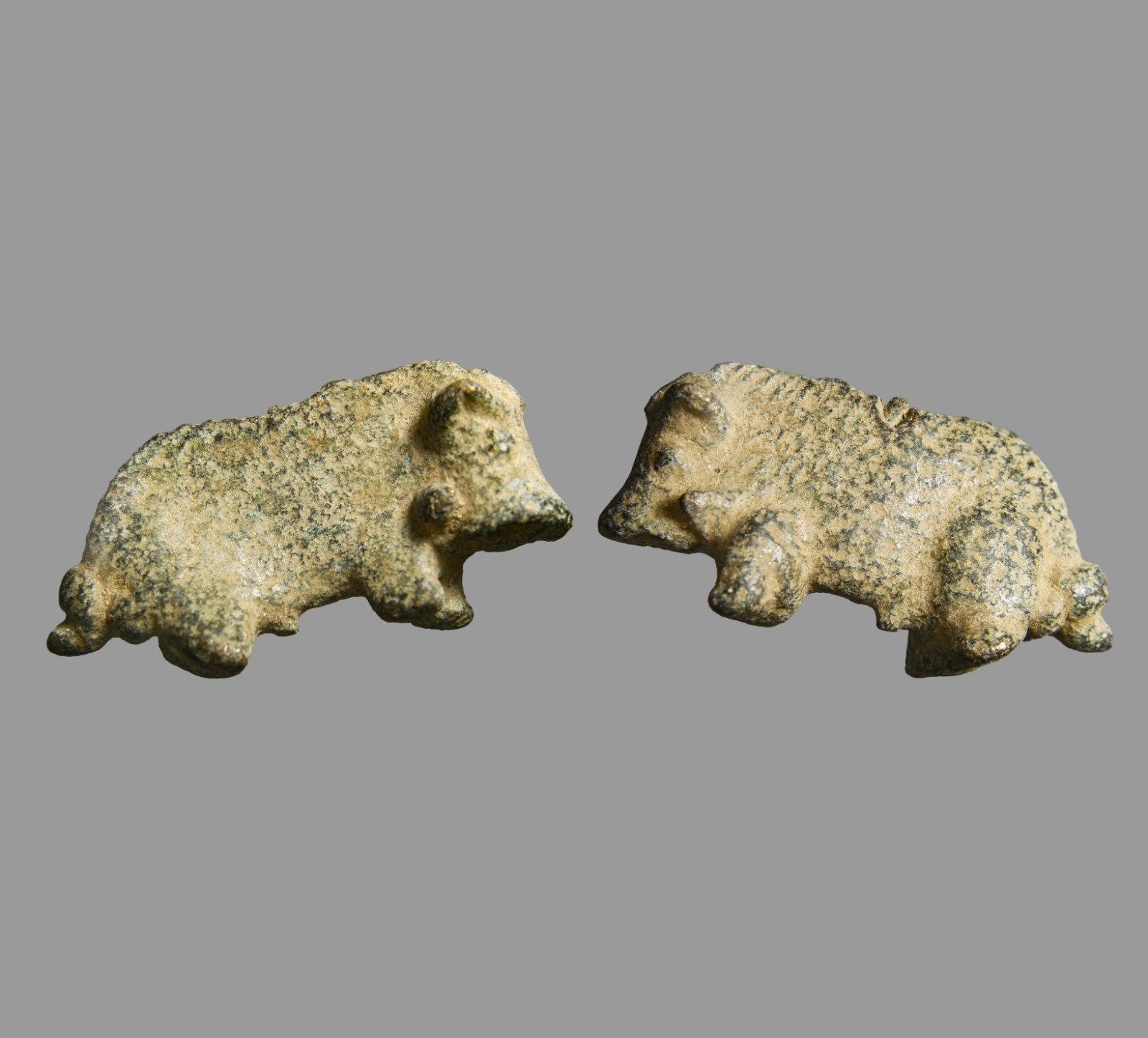
Ancient Near Eastern Bronze Votive Wild Boar Figurine (Circa 2nd Millennium BC)
Authenticity & Guarantee
Item Specifications
Object: Votive Animal Figurine / Zoomorphic Amulet (Wild Boar)
Culture / Period: Ancient Near Eastern (Levantine / Canaanite / North Syrian / Anatolian Sphere)
Date Range: Circa 2000 BC – 1500 BC (Middle Bronze Age)
Dimensions: 3.6 cm (approx. 1.4 inches)
Material: Heavy Cast Bronze (Copper Alloy)
Condition: Exceptional complete condition. Fully intact cast form with strong sculptural details and a heavy, authentic desert-sand and cuprite-green burial patina.
Historical Context & Sacred Animal Symbolism
The Wild Boar in Near Eastern Mythology & Ritual
In the ancient Near East and Levant during the Bronze Age, the wild boar (Sus scrofa) was revered as a powerful symbol of feral strength, untamed nature, and virility (Ref: Collon, Ancient Near Eastern Art, University of California Press, 1995). Small cast bronze animal figurines were deposited as votive offerings (eulogiai) in temples and shrine altars to seek divine protection, hunting success, or agricultural prosperity from deities linked to nature and storm cults, such as Hadad or Baal (Ref: Moorey, Ancient Mesopotamian Materials and Industries, Eisenbrauns, 1999).
Votive Purpose & Casting
Miniature bronze zoomorphic figures were cast using the lost-wax (cire perdue) method. Their small size made them portable personal talismans or affordable temple offerings left by worshippers at holy sites across Syria, Canaan, and Anatolia (Ref: Muscarella, Bronze and Iron: Ancient Near Eastern Artifacts in The Metropolitan Museum of Art, Metropolitan Museum of Art, 1988).
Typological Analysis & Comparable Museum Accession Parallels
Sculptural Details & Craftsmanship
Solid-cast bronze rendering with a pronounced textured spine representing the bristled dorsal mane. The compact, heavy proportions and expressive snout are classic markers of 2nd Millennium BC Near Eastern metalwork.
Comparable Archaeological Examples & Museum Accession Numbers
British Museum (Accession No. 138863): Near Eastern bronze figurine of a wild boar / quadrupeds from early Levantine bronze contexts.
Louvre Museum (Inventory No. AO 22262): Middle Bronze Age Levantine bronze votive animal figurine from Syrian/Phoenician workshop traditions.
Ashmolean Museum (Accession No. AN1969.488): Ancient Near Eastern bronze zoomorphic figurine from Bronze Age Levantine deposits.
TRN-1-2