When you click on links to various merchants on this site and make a purchase, this can result in this site earning a commission. Affiliate programs and affiliations include, but are not limited to, the eBay Partner Network.
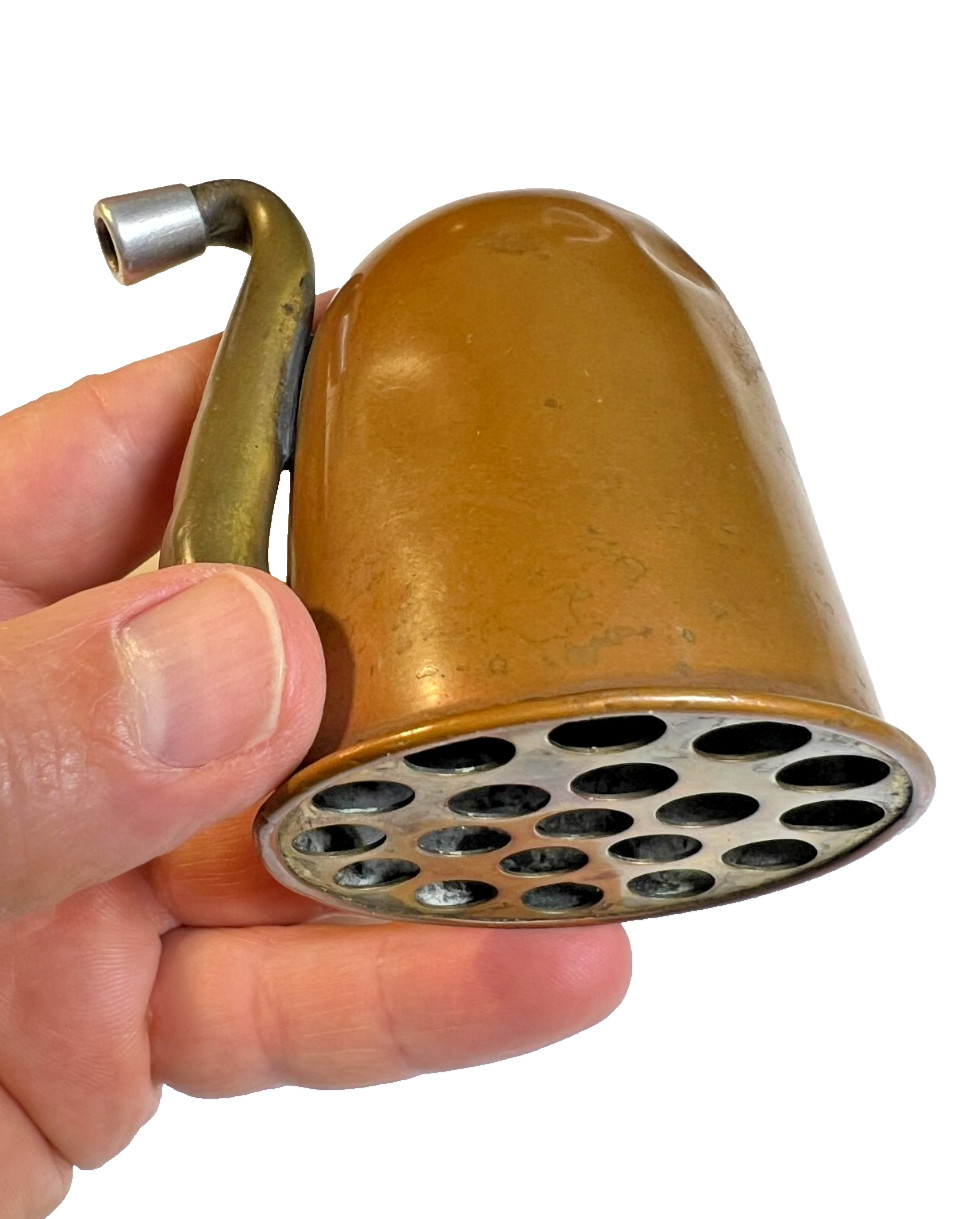
Antique Brass Ear Trumpet Hearing Aid c.1880–1910 Handheld Acoustic Aid Patina
Before batteries, before circuits, before anyone could “turn up the volume,” this was the technology. A simple, beautifully crude solution: gather more sound, funnel it, and hope the world gets a little louder. Your piece wears its dents like battle scars—proof it actually worked for someone.
Precise Date
Circa 1880–1910
Why:
- The multi-perforated intake plate is a later refinement (mid-to-late 19th century onward) to reduce distortion vs. open bell trumpets
- The compact “cup” form suggests portability—more common around the turn of the century
- The metal ear tip (instead of hard rubber or ivory) leans slightly earlier within that range
What It Is / How It Works
This is a non-electric acoustic hearing aid. No amplification—just physics:
- The perforated face gathers sound waves
- The chamber concentrates them
- The curved tube directs them into the ear canal
Think of it as a mechanical version of cupping your hand behind your ear… just with better engineering and more Victorian attitude.
Evolution of Hearing Aids (and why this matters)1. Early Days (1600s–1700s)
- Basic animal horns and metal funnels
- Used openly—no real attempt to disguise them
2. 19th Century Refinement (your piece’s era)
- Shapes became more compact and directional
- Materials: brass, silver, gutta-percha, hard rubber
- Perforated collectors (like yours) improved clarity
- Wealthier users had custom, even decorative versions
Eye-opener:
Beethoven—yes, that Beethoven—used ear trumpets. His were so large and awkward they looked like something you’d use to listen for submarines.
3. Disguised Devices (late 1800s–early 1900s)
- Hearing aids hidden in walking sticks, fans, hats, even furniture
- Because hearing loss carried social stigma
4. Electric Era (1898 onward)
- First carbon microphone hearing aids
- Massive battery packs worn on the body
Wild stat: Early electric hearing aids weighed several pounds. You didn’t lose your hearing—you gained a workout.
5. Modern Revolution
- 1950s: Transistors shrink devices
- Today: digital, AI-assisted, nearly invisible
Why These Matter Historically
- Hearing loss has always been common—but socially hidden
- Devices like this were often used quietly, privately
- They represent a moment where engineering met dignity—trying to help without drawing attention
Life in This Era (1880–1910)Technology
- Electric light is spreading, but many homes still use gas
- Telephones are new and rare
- Automobiles are just beginning to appear
Medicine
- Germ theory is gaining acceptance
- No antibiotics yet—ear infections could permanently damage hearing
- Doctors often blamed “nervous conditions” or age
Politics & Society
- Industrial boom, massive urban growth
- Labor movements rising
- In the U.S.: Gilded Age wealth vs. working-class struggle
- Communication is changing fast—but ironically, many people couldn’t fully hear it
Condition Notes
- Strong original patina = good
- Lots of dents = expected and acceptable (honestly, almost required)
- Original metal ear tip present = big plus
- No cracks or splits
A small, human piece of history—built in an era when hearing the world required a little ingenuity, a little brass, and a lot of patience.