When you click on links to various merchants on this site and make a purchase, this can result in this site earning a commission. Affiliate programs and affiliations include, but are not limited to, the eBay Partner Network.
Unmarked Vintage Japanese Katana Description
Hamon (Blade Pattern)
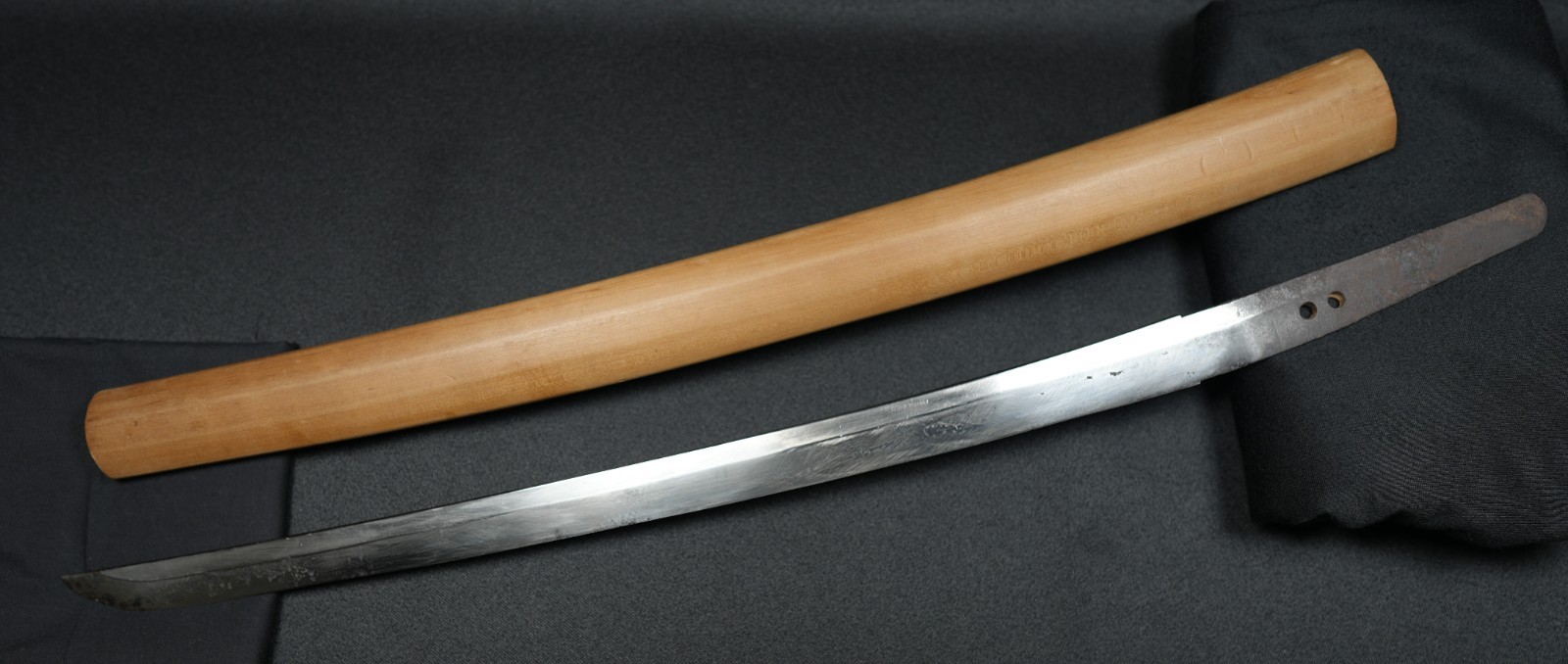
This blade features a suguha (straight) hamon as its foundation, with subtle variations that include elements of ko-gunome (small undulations). The temper line is relatively clear and flows naturally toward the tip, reflecting a design focused on practicality. It is believed to date from the Edo period, showing the utilitarian priorities of that era.
Jigane (Steel Surface)
The jigane consists of a tightly forged itame-hada (wood grain pattern), with minimal visible grain activity. No utsuri (tempering shadow) is present, and the plain, refined appearance of the steel is characteristic of many provincial blades made in the mid to late Edo period.
Nakago & Shape (Tang & Overall Form)
The blade exhibits a gentle curvature (chu-sori) and is well-balanced with a medium-length kissaki (tip). The tang features two mekugi-ana (peg holes), with clearly visible signs of suriage (shortening). This indicates that the blade was originally forged as a katana and was later modified into a wakizashi, classifying it as an \"ō-wakizashi.\" The tang’s shallow yasurime (file marks) and the shape of the tang end suggest the remounting occurred during the mid to late Edo period.
This blade represents a practical reconfiguration of a katana in response to the transition of combat styles during the Edo period—from open-field battles to indoor and close-quarters encounters. It stands as an example of a warrior\'s weapon reshaped to suit the realities of changing warfare.
Specifications Main MaterialTamahagane OriginJapan Total Length58 cm (22.8 inches) Blade Length44.4 cm (17.4 inches) Curvature0.8 cm (0.27 inches) TypeWakizashi Surface GrainItame-hada Mei (Signature)Mumei Blade PatternSuguha Original or ReplicaOriginal EraEstimated Edo Period (1603–1867) Included ItemsNone.The handle part of the Shirasaya is also missing.
High-resolution photos are provided for close inspection. Please don’t hesitate to contact us for additional images or further information.
Important Information for International Buyers
Please verify with your local customs authority whether Japanese katanas can be imported into your country. Import duties, taxes, and fees are not included in the product price or shipping charges. These costs are the buyer\'s responsibility.
We comply with international regulations and do not underdeclare the value of goods or mark them as gifts.
Shipping may not be possible to certain countries. If that is the case, your order may be canceled.
Shipping & Packaging
The katana will be securely packaged in a hard case to ensure safe delivery, even under rough handling conditions. Depending on the destination country’s shipping size regulations, the katana may be disassembled into parts. This is a standard procedure, and reassembly is simple with proper guidance.
Note: The original Japanese registration certificate shown in the photos will not be included, as it must be returned to the government. A photocopy can be provided upon request.
For EU Buyers
EU Right of Withdrawal
EU buyers may also exercise their Right of Withdrawal online at US Buyers
Effective July 24, 2026, the range of commercial shipments to the United States for which customs duties must be paid in advance has been expanded from goods valued at USD 800 or less to goods valued at USD 2,500 or less.
Accordingly, for items valued at USD 2,500 or less, the seller will pay the applicable customs duties in advance at the time of shipment.
As the customs duties are included in the listed price, customers will generally not be required to pay any additional customs duties upon delivery.