When you click on links to various merchants on this site and make a purchase, this can result in this site earning a commission. Affiliate programs and affiliations include, but are not limited to, the eBay Partner Network.
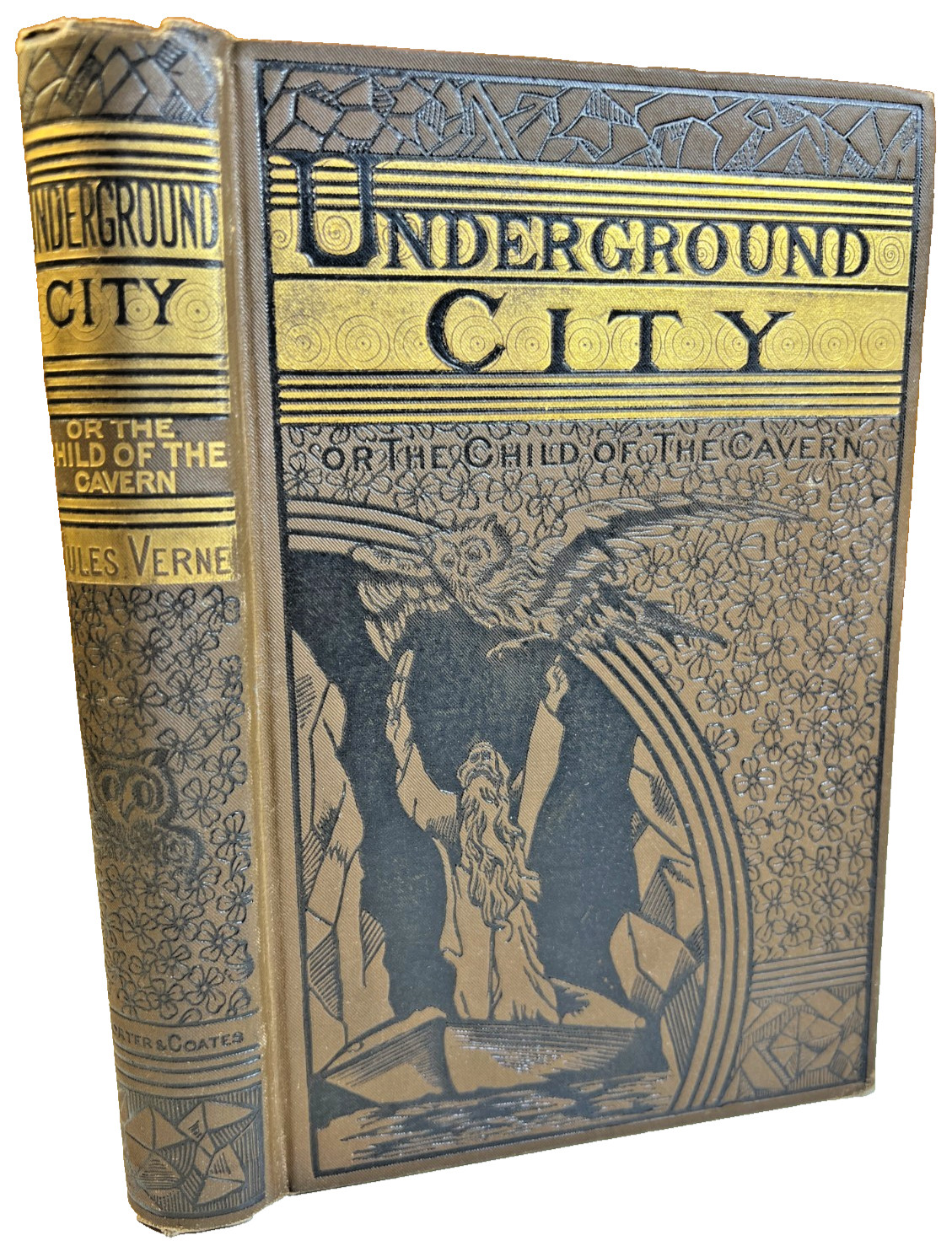
Title: Underground City; or, The Child of the Cavern
Author: Jules Verne
Translator: W. H. G. Kingston
Publisher: Porter & Coates, Philadelphia
Date: 1883 (undated, but firmly attributed)
Edition: First American edition
Binding: Publisher’s original brown pictorial cloth, gilt & black stamped
Illustrations: Numerous full-page wood engravings (frontispiece present)
Pagination: 246 pages
This is not one of Porter & Coates’ later “reprint-from-Osgood” issues.
In the late 1870s, P&C purchased plates for specific Verne titles from Osgood and reissued those.
Underground City was different — this was new to the American market in 1883.
This volume represents Porter & Coates’ own first American production, not a recycled plate job.
Why this book matters (context you should lean into)
Underground City sits in a very interesting Verne moment:
It’s part of Verne’s shift from outward exploration (sea, poles, space) to industrial & subterranean worlds
The novel taps directly into:
19th-century coal mining culture
Victorian fascination with geology and underground civilizations
The late-Industrial Age anxiety about what lies beneath progress
And this Porter & Coates binding is peak American Verne:
Heavy pictorial cloth
Gilt title panel that actually still pops
Dense black stamping with allegorical imagery
Designed to look impressive on a shelf before dust jackets were a thing
This is exactly the sort of book that lives happily next to 20,000 Leagues and Journey to the Center of the Earth in a serious collection.
Condition assessment
Cloth: Very clean, minimal rubbing at spine base & corners
Gilt: Strong and legible
Spine: Square, tight, no lean
Endpapers: Clean
Interior: Bright, very light scattered foxing only
Plates: Present and sharp
No loose signatures, no repairs, no rebacking
This is honestly better than the average surviving copy, which often shows: