When you click on links to various merchants on this site and make a purchase, this can result in this site earning a commission. Affiliate programs and affiliations include, but are not limited to, the eBay Partner Network.
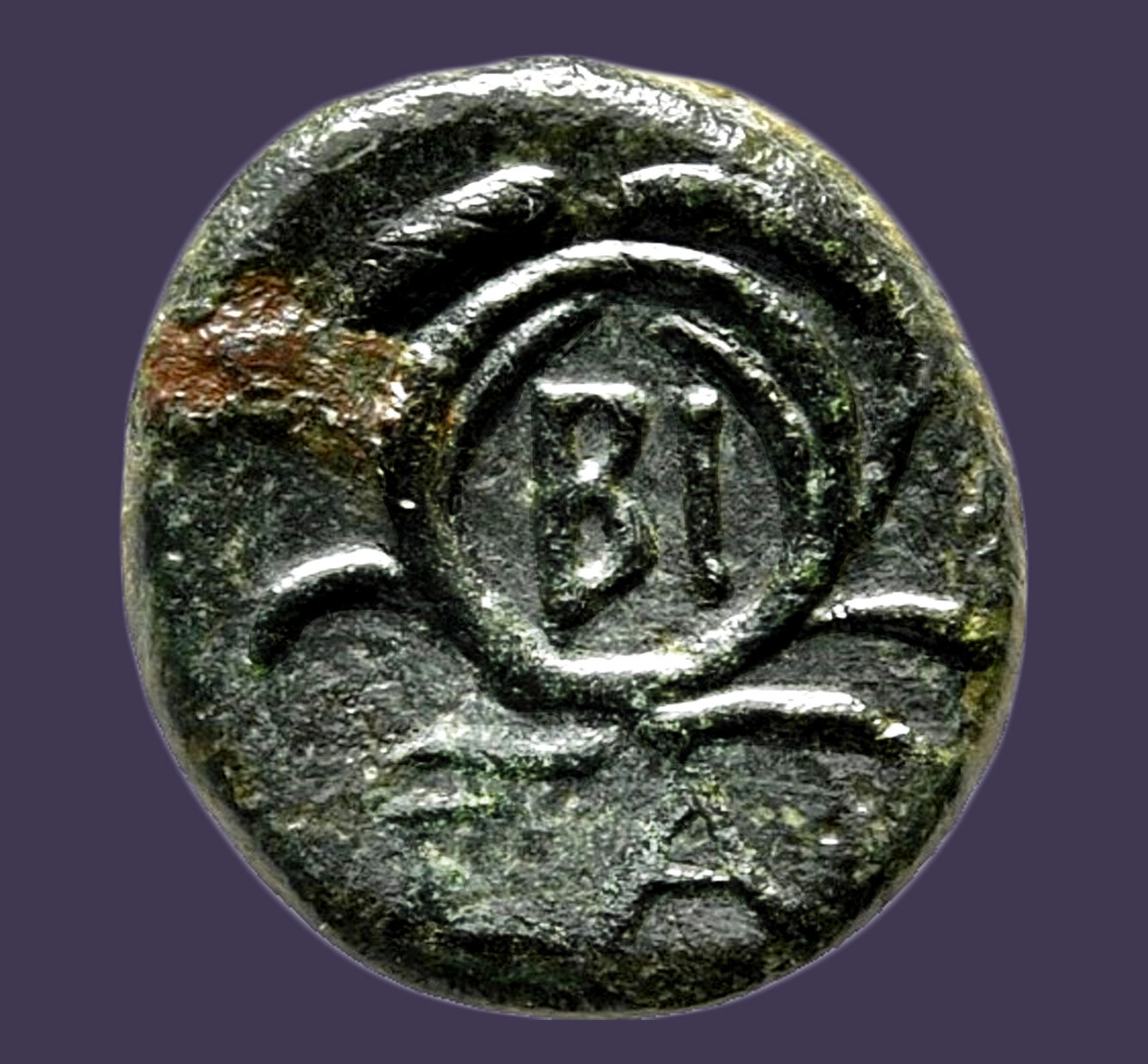
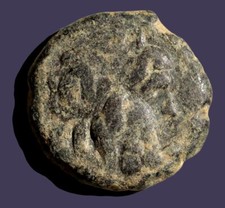
Archaios Bronze Coin of the Bisanthe,Thrace circa 300-200 BC.
Obverse: Veiled head of Demeter right wearing grain wreath
Reverse: Ethnic within grain ear wreath and below: BI/ ΣΑ.
Mint: Bisanthe, Thrace
Size: 14 mm
Weight: 1.97 g
Ref: BMC -- ; SNG Cop -- ; HN --; SNG BM Black Sea -- ; Schönert-Geiss 40-1 var. (ethnic) ; CNT online 3674 var. (same).
Inventory: 1912.43.3
Condition: VF. Very nice example of this Extremely Rare type (variant ethnic of BI/ΣΑ rather than just BI or BI/ΣΑN) and interesting type from a rare city !
The sole example we\'ve found of this type in past sales is cf. NN 46, Lot 49 (Sept 2016) Hammer: 350EUR. As always, Use the Picture as your judge as grading is subjective.
Notes:
Bisanthe was a great city in ancient Thrace, on the north east coast of the Propontis, which had been founded by the Samians. The town is a few miles west of Perinthus. About 400 BCE, Bisanthe belonged to the kingdom of the Thracian prince Seuthes II.
At a later period the city apparenlty had its name changed to Resisto (or Raedestus) but when this change took place is unknown. It is generally believed that the town of Resistos or Resisto, mentioned by Pliny the Elder, and in the Antonine Itinerary, is the same as Bisanthe; but Pliny mentions Bisanthe and Resistos as distinct towns. In the 6th century CE, the emperor Justinian did much to restore the city, which seems to have fallen into decay.
COINAGE
The few autonomous coins struck at this town are all Bronze and seem to have been issued shortly after the death of Lysimachus, After circ. B.C. 280.
Exceprt from Head, Historia Numorum; Wikipedia, the free encyclopedia.