When you click on links to various merchants on this site and make a purchase, this can result in this site earning a commission. Affiliate programs and affiliations include, but are not limited to, the eBay Partner Network.
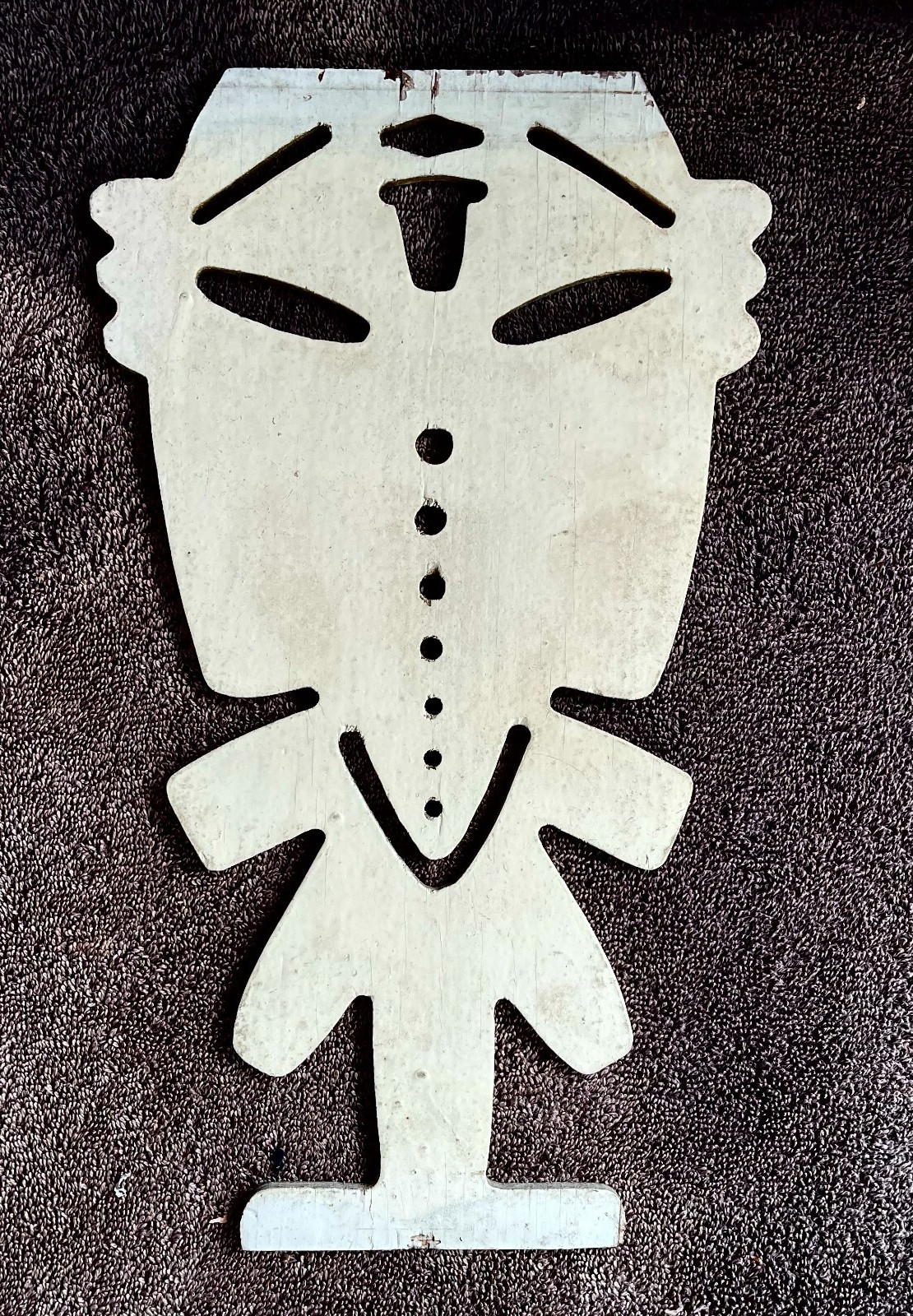
THIS is a VintageWAIKIKIAN HOTEL / Tahitian Lanai WAIKIKIAN HOTEL Vintage Original 1956 TIKI Door DIVIDER to LANAI Style MID CENTURY MODERNfrom Honolulu HAWAII
I INCLUDE PHOTOS ( for reference only ) FROM THE BROCHURE OF THE TIKI PANNEL AND HOW IT WAS USED IN THE HOTEL ROOM DECOR
The PETE WIMBERLY 1956 Tiki Vintage WAIKIKIAN HOTEL Door LANAI is a collectible piece that exudes a Mid Century Modern aesthetic, reminiscent of the iconic Hawaiian cultural influence of the time.
Originating from the HAWAII, this Tiki Door Pannel captures the essence of the vintage Waikikiian Hotel, making it a unique and sought-after item for collectors of Hawaiian memorabilia and those with a passion for retro design.
Perfect for adding a touch of authentic nostalgia and tropical flair to any space, this piece embodies the charm and style of the mid-20th century Hawaiian hospitality industry.
THIS IS MID CENTURY POLYNESIAN MODERNISM at its finest
The WAIKIKIAN HOTEL Vintage Original 1956 TIKI Door LANAI Style MID CENTURY MODERN is a collectible piece from the United States that embodies the vibrant culture and style of Hawaii.
Opened in 1956, the mid-century Waikikian Hotel featured \"longhouse\" room blocks where all lanais were designed as furnished, walk-out balconies The Waikikian - WATG.
They faced inward into the resort\'s lush, banana palm-filled garden court rather than the street, providing a secluded, jungle-like tropical atmosphere The Waikikian - WATG.Designed by architect Pete Wimberly to pioneer tropical modernism in Hawaii.
George \"Pete\" Wimberly (1915–1996) was an American architect known as \"the man who changed the face of the Pacific.\"
He was the founding partner of WATG (formerly Wimberly Allison Tong & Goo) in Honolulu and pioneered modern luxury resort design.
Wimberly moved to Hawaii in 1940 and founded his architectural firm in 1945.
He revolutionized global hospitality by moving away from generic, standardized hotels and designing resorts that immersed guests in the local landscape and culture.
He designed many of the Pacific\'s most famous landmarks, including:The Sheraton MauiThe Coco Palms Resort on KauaiThe Waikikian Hotel in HonoluluThe original International Market Place in Waikiki
Over the decades, WATG expanded globally to become one of the world\'s leading hotel and resort design firms.
Wimberly was famous for his hands-on, adventurous approach to design.
He was known for traveling the world alongside Pan Am founder Juan Trippe, famously carrying only a pencil, a flashlight, and a screwdriver to remove hotel doors to use as makeshift drawing board
A \"Pete Wimberly tiki\" refers to the iconic Polynesian-pop architecture and tropical aesthetic pioneered by George \"Pete\" Wimberly, a famed mid-century architect known for his resort designs in Hawaii.
Rather than a single carved statue, the term represents his signature \"Tiki-chic\" style—which combined modern structural design with immersive, South Seas fantasy themes to create legendary establishments.
Key characteristics of Wimberly\'s Tiki designs:
Tropical Modernism: He seamlessly blended mid-century modern architecture with indigenous Hawaiian elements like lava rock, local woods, and open-air layouts.
Immersive Environments: His projects often featured massive, hand-carved tikis, thatched roofs, lush indoor landscaping, and dramatic swooping or A-frame roofs
Collaboration with Tiki Masters: He frequently collaborated with legendary tiki pioneers like Donn Beach (creator of Don the Beachcomber) and restaurateur Peter Canlis to create iconic dining and drinking destinations.
Notable Pete Wimberly Tiki Projects
The Waikikian Hotel (1956): Described as the \"most beautiful hotel in Hawaii,\" this iconic resort featured a dramatic hyperbolic paraboloid roof and helped popularize the Polynesian-pop aesthetic.
The Kona Hilton / Royal Kona Resort (1968): Designed with deep ties to Hawaiiana and mid-century modernism, this Big Island resort embodies his signature tropical architectural spirit.
Canlis’ Charcoal Broiler (1954): A legendary high-end restaurant in Waikiki that featured a 15-foot hand-carved tiki and perfectly encapsulated the merging of luxury dining and tiki flair.
The property of the WAIKIKIAN embraced the outdoors at every turn The Waikikian - WATG, Tahitian Lanai and Papeete Bar - at the Waikikian Hotel .
The lanais specifically featured:Garden Orientation:
Instead of facing the sea or Ala Moana Boulevard, the balconies were oriented toward the interior serpentine courtyard The Waikikian - WATG.
Immersive Landscaping:
The lanais overlooked acres of heavily planted banana palms and Hawaiian foliage that created an \"impenetrable jungle effect\" The Waikikian - WATG.
Tiki Aesthetics: The overall resort grounds were adorned with tiki torches, Marquesan tikis, and lush tropical gardens Tahitian Lanai and Papeete Bar - at the Waikikian Hotel which seamlessly extended the ambiance of the rooms themselves.
The hotel was demolished in 1996 and replaced by the Grand Waikikian - Waikiki Condo Tower.
This unique item serves as a nostalgic reminder of mid-century modern design and the iconic tiki trend from the 1950s.
With its retro aesthetic and historical significance, this piece is sure to be a prized addition to any collection or a charming feature for a vintage-inspired space.
size is 9 x 14 inches and made of wood
HAWAII\'S MOST UNUSUAL HOTEL.
The Waikikian Hotel, right on the beach & lagoon at Waikiki, was a long-time touristy institution on Oahu.
The Waikikian housed the Tahitian Lanai restaurant and Papeete Bar; all three opened in 1956.
The hotel is instantly recognized by its unusual lobby, a dramatically stylized A-frame fashioned from a massive hyperbolic paraboloid, designed by architect Pete Wimberley.
Much of the decorative carving and other touches were from Edward Brownlee.
The grounds also included tiki-spotted gardens, and the lobby housed a gallery of black velvet Leeteg paintings.
The Waikikian closed in 1996; in 2006, development is underway to open a 38-story timeshare as part of the nearby Hilton Hawaiian Village complex.
The new tower will be called \"Waikikian.\"
When we were asked to design the Waikikian, as a small but rather up-market hotel, for Mr. Fred Dailey and the Los Angeles Athletic Club, we felt that it was incumbent upon us to provide an architecture that was an expression of the culture of the Islands and, further, an architecture of signature.
As a Waikiki hotel, the building’s primary users would be people attracted to the idea of Polynesia–informality, tropical landscaping,
Pacific arts and crafts, and architecture appropriate to the climate, if not authentic reproduction of native habitat.
The Tahitian Lanai and Papette Bar was located in the Waikikian Hotel on the beautiful island of Oahu.
Spence Weaver opened the restaurant after falling in love with a dancer he met while on vacation in Tahiti.
And, it worked - she later became his wife.
Weaver brought on Bob Bryant, founder of San Francisco’s Tiki Bob’s.
With decor flown in from Tahiti, palm trees and pareu-clad “maidens”, the restaurant tried to give the guests an authentic South Seas experience.
Diners could sit poolside surrounded by tiki torches, in private huts, or in the main dining room.
Exotic Polynesian drinks were served along side a menu of traditional Tahitian dishes, although they were also known for the eggs benedict.
The Tahitian Lanai, and the Waikikian Hotel, opened in 1956 and closed 40 years later.
The Tahitian Lanai, and its Papeete Bar, were located in the Waikikian hotel, right on the beach at Waikiki on Oahu.
They opened on October 1, 1956.
Spence Weaver, of Spencecliff Restaurants, operated the restaurant, and Bob Bryant, founder of Tiki Bob\'s in San Francisco, was hired to manage the restaurant.
Bob Bryant said of the Waikikian and Tahitiian Lanai, \"Before leaving the Mainland for the first time, everybody has his own dream of what Hawaii and Tahiti will be like.
In designing this hotel-restaurant complex, we tried to fulfill those ideas.
We tried to make this a \'dream Tahiti\' instead of just a duplicate of the real island.\"
The restaurant housed 40 tikis, including a large Marquesan that was purported to be at least 200 years old, and a number of black velvet Leeteg paintings.
Diners could sit poolside surrounded by tiki torches, in private huts named after Tahitian Royalty (like the Queen Pōmare IV Hut or Prince Hinoi Hut), or in the main dining room.
The Waikikian closed in 1996, and the items from the hotel and restaurant were sold in an sale that took place at the Tahitian Lanai.
SIZE is about 9 x 14 inches and made of wood
ITEM in good condition but EXAMINE PHOTOS CAREFULLY TO DETERMINE THE CONDITION FOR YOURSELF.
PLEASE EXAMINE PHOTOS CAREFULLY TO SEE DETAILS..