When you click on links to various merchants on this site and make a purchase, this can result in this site earning a commission. Affiliate programs and affiliations include, but are not limited to, the eBay Partner Network.
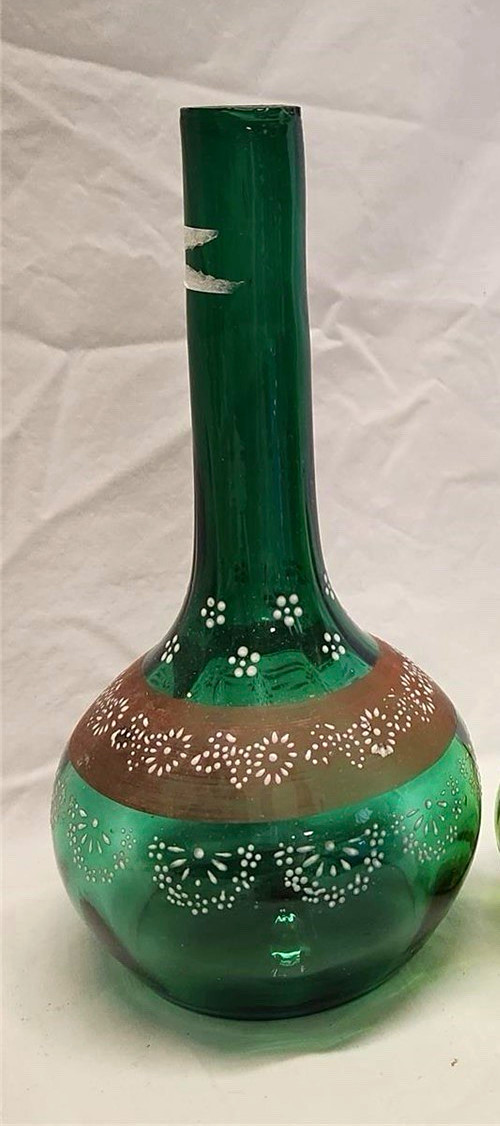
• Era & Origin: Produced during the late Victorian to Edwardian era, typically dated around 1880–1910.
• Use: Originally used in barbershops or vanity tables to hold hair tonics, bay rum, witch hazel, or colognes.The rough, broken glass mark on the bottom, means it has a pontil scar. This mark confirms the bottle was entirely hand-blown by a craftsman rather than made in a commercial mold.What the Pontil Scar Tells You:
• Production Method: A glassblower used a metal rod (a pontil rod) to hold the bottom of the hot bottle while shaping the neck and rim. When the bottle was finished, the rod was snapped off, leaving that signature scar.
• Age Verification: Hand-blown barber bottles with pontil scars typically date from the 1870s to the 1890s. By the 1900s, automatic bottle-making machines and smooth-bottom molds largely replaced this technique.
• Value Impact: Collectors highly prize pontil marks. A visible, rough pontil scar generally increases the value and desirability of an antique barber bottle compared to smooth, machine-made replicas.