When you click on links to various merchants on this site and make a purchase, this can result in this site earning a commission. Affiliate programs and affiliations include, but are not limited to, the eBay Partner Network.
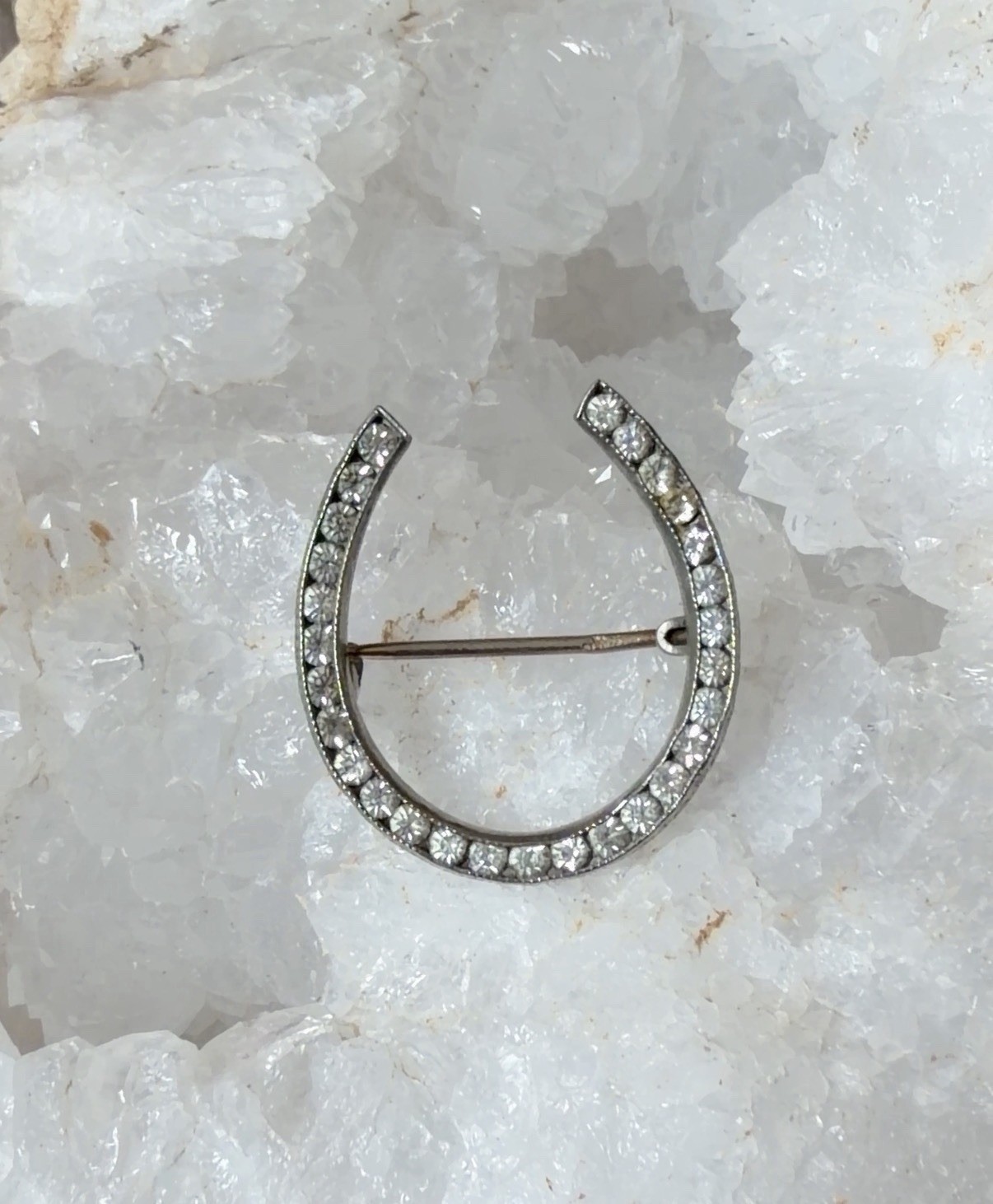
A stunning antique Edwardian era (circa 1900–1910) rhinestone horseshoe brooch, blending turn-of-the-century luck symbolism with delicate craftsmanship. The piece features a row of channel-set, clear paste rhinestones along the face and fine hand-etched scrollwork details running along its outer edges.
A quintessential antique piece for collectors of equestrian memorabilia, Victorian/Edwardian jewelry, or traditional good-luck charms!
Why It’s Edwardian Era (c. 1900–1910)
Unlocked C-Clasp Construction: Features an authentic open C-clasp hinge mechanism without a rotating safety latch. Safety catches were patented in the 1900s and standard by the 1920s, making an un-locking C-clasp a hallmark indicator of pre-1920 manufacturing.
Equestrian & Luck Symbolism: Horseshoes were wildly popular tokens given to wish loved ones luck and protection during the late 19th and early 20th centuries. Facing upwards (in a 'U' shape), it was worn to "catch and hold" good fortune.
Refined Detailing: The transition into the Edwardian era brought lighter, more intricate hand-engraved scrollwork and delicate channel stone-setting compared to the heavier, bolder styles of the earlier Victorian period.
Item Details & Specifications
Era: Edwardian (c. 1890s–1910s)
Design: Horseshoe motif with clear paste/rhinestones & engraved border
Measurements: Approx. 1.25 inches (3 cm) tall (see ruler photo for exact scale)
Closure: Original C-clasp and pin stem
Condition Report
Overall: Very good antique condition given its age.
Stones: All original clear rhinestones are intact. Some stones exhibit mild vintage darkening/patina typical of old paste glass.
Metal & Hardware: The pin mechanism and C-clasp function properly. Light age-appropriate surface wear to the silver-tone finish.
> Note: Please carefully examine all high-resolution photos as they are an essential part of the condition description.