When you click on links to various merchants on this site and make a purchase, this can result in this site earning a commission. Affiliate programs and affiliations include, but are not limited to, the eBay Partner Network.
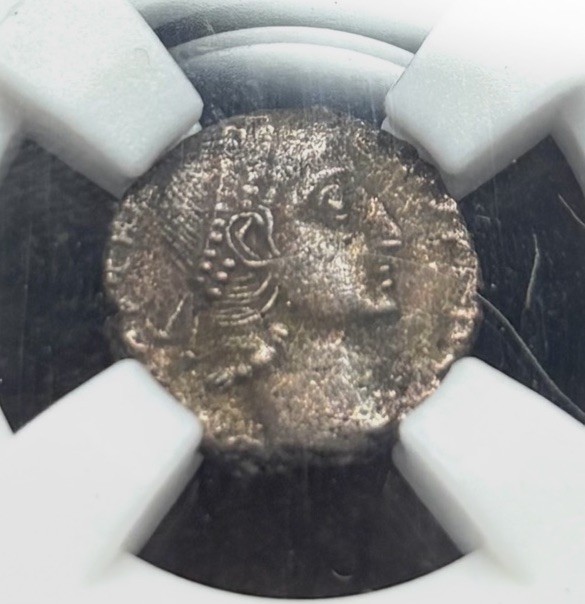
A fascinating Roman bronze follis from the House of Constantine, surviving in VF (Very Fine) condition and featuring the distinctive vows (VOT) inscription within a wreath. This historic coin comes from one of the most transformative periods in Roman history, when the empire was undergoing enormous political and religious change.
Coin Details:
• Empire: Roman Empire
• Dynasty: House of Constantine / Constantinian Dynasty
• Denomination: Follis
• Composition: Bronze
• Condition: VF
• Reverse Type: Vows (VOT) within Wreath
• Era: Late Roman Empire
The House of Constantine is one of the most important dynasties in Roman history. Its most famous ruler, Constantine the Great, emerged victorious from a period of civil wars and eventually became sole ruler of the Roman Empire.
Constantine\'s reign fundamentally changed the course of European and Mediterranean history. Following his victory at the Battle of the Milvian Bridge in AD 312, Constantine increasingly supported Christianity. The Edict of Milan in AD 313 established religious toleration for Christians within the empire, marking a dramatic change after periods of imperial persecution.
Constantine also founded Constantinople on the site of ancient Byzantium and formally dedicated the city in AD 330. Constantinople would become the capital of the Eastern Roman Empire and remain one of the world\'s great political, economic, and Christian centers for more than a thousand years.
The VOT inscription within a wreath refers to imperial vows (vota) made for the continued rule, health, and prosperity of the emperor. These inscriptions often commemorated completed anniversaries of an emperor\'s reign or vows undertaken for future anniversaries, making them closely connected to Roman imperial ceremonies and political legitimacy.
The surrounding wreath was an ancient symbol of victory and honor, giving the reverse design both ceremonial and political significance.
This follis therefore represents much more than everyday Roman currency. It comes from the Constantinian era, when the Roman world was transitioning from the traditional religious and political order of antiquity toward the increasingly Christian empire of Late Antiquity and Byzantium.
An excellent historical piece for collectors of Constantine the Great, Late Roman, early Christian, Constantinian dynasty, or ancient Roman coinage.
You will receive the exact coin pictured. Please examine all photographs carefully for condition, strike, surfaces, patina, and overall appearance.