Heat.net Store Home
|
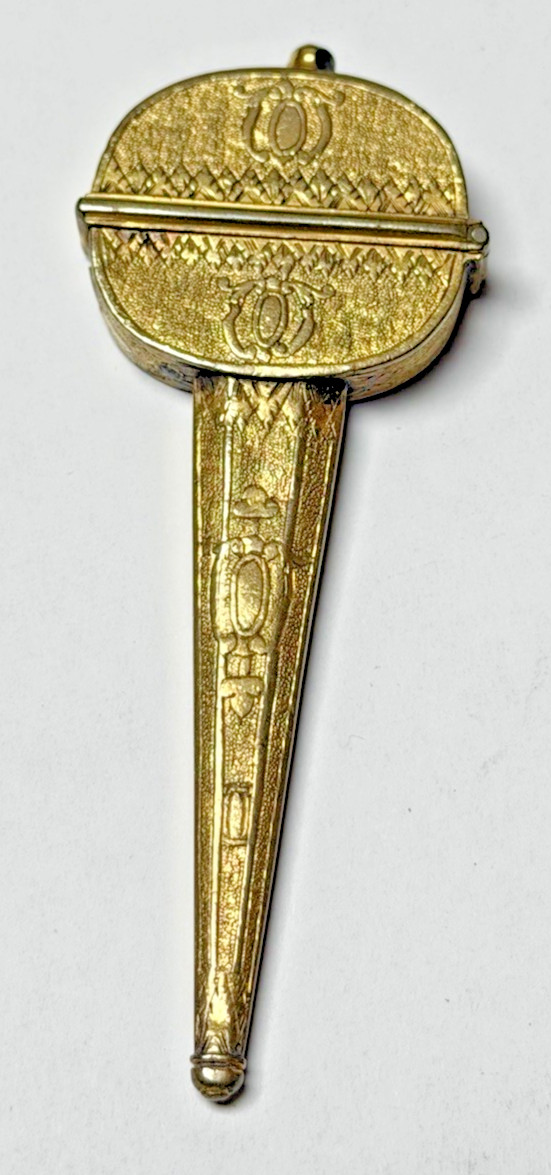
Antique Georgian Gilt Metal Pinchbeck Chatelaine Scissors Case Sheath RARE #868 For Sale

When you click on links to various merchants on this site and make a purchase, this can result in this site earning a commission. Affiliate programs and affiliations include, but are not limited to, the eBay Partner Network.

Antique Georgian Gilt Metal Pinchbeck Chatelaine Scissors Case Sheath RARE #868:
$450.00
Based on its reference in Genevieve Cummins & Nerylla Taunton\'s authoritative reference work Chatelaines: Utility to Glorious Extravagance, as well as its specific stylistic and material characteristics, this piece dates to the mid-to-late 18th Century (circa 1750–1780, Georgian Period). It is pictured on Color Plate #16 (right) in this book and was purchased from Dr. Genevieve Cummins.Key Historical & Stylistic Context Material (Pinchbeck): Pinchbeck—a golden-colored alloy of copper and zinc invented in the 1720s by London watchmaker Christopher Pinchbeck—was predominantly used during the 18th century (Georgian era) for items like etuis, scissor sheaths, watch cases, and chatelaine appendages. By the mid-19th century (Victorian period), Pinchbeck had largely been replaced by rolled gold and other cheaper electroplated alloys. Form & Function: This specific form—a tapered scissor sheath featuring a wide, hinged oval top container designed to hold a pair of folded scissors alongside small sewing accoutrements (or a thimble/needle case combination)—is a classic 18th-century English/European equipage or chatelaine accessory. Rococo / Georgian Metalwork: The sheath are characteristic of English metalworking decorative styles popular between 1750 and 1780. - Suspension and Attachment on a 18th-Century Chatelaine
During the Georgian period (circa 1750–1780), a scissor sheath like this was rarely worn as an isolated accessory. Instead, it formed part of a coordinated ensemble called an equipage or chatelaine, which was worn at the waist by women of status as both a functional tool carrier and a display of craftsmanship. How Scissor Sheaths Were SuspendedTop Ring Attachment: Notice the small ring or loop lug fixed directly to the center-top of the oval hinged cap on this sheath. A short length of decorative chain or a hinged metal drop link clipped through this loop, connecting the sheath to the main body of the chatelaine above.
The Main Chatelaine Structure: The Belt Hook / Plaque: At the top of the set was a sturdy, decorative metal hook (or slide) that slipped over the waistband of a lady\'s apron, skirt, or belt. The visible face of the hook was usually decorated in the same matching Pinchbeck style (chased, repoussé, or engine-turned lattice patterns). Tiered Plates / Chains: Hanging down from the main hook were one or more cast or stamped decorative metal plates joined by jump rings, or multi-strand chain suspensions.
Multi-Drop Configuration:
|
|
Other Related Items:
Related Items:
Antique Georgian Gilt Metal Pinchbeck Chatelaine Scissors Case Sheath RARE #868 $450.00
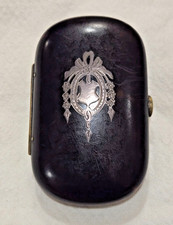
Antique Georgian Tortoiseshell Box with Silver Mounts & Hallmarks $400.00
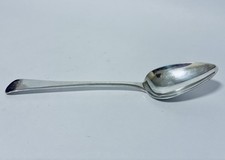
Antique Georgian Solid Sterling Silver Serving Spoon 1806 EXETER William Welch $204.72
|