When you click on links to various merchants on this site and make a purchase, this can result in this site earning a commission. Affiliate programs and affiliations include, but are not limited to, the eBay Partner Network.
Arny Karl
(1940-2000)
California Plein-Air Painter
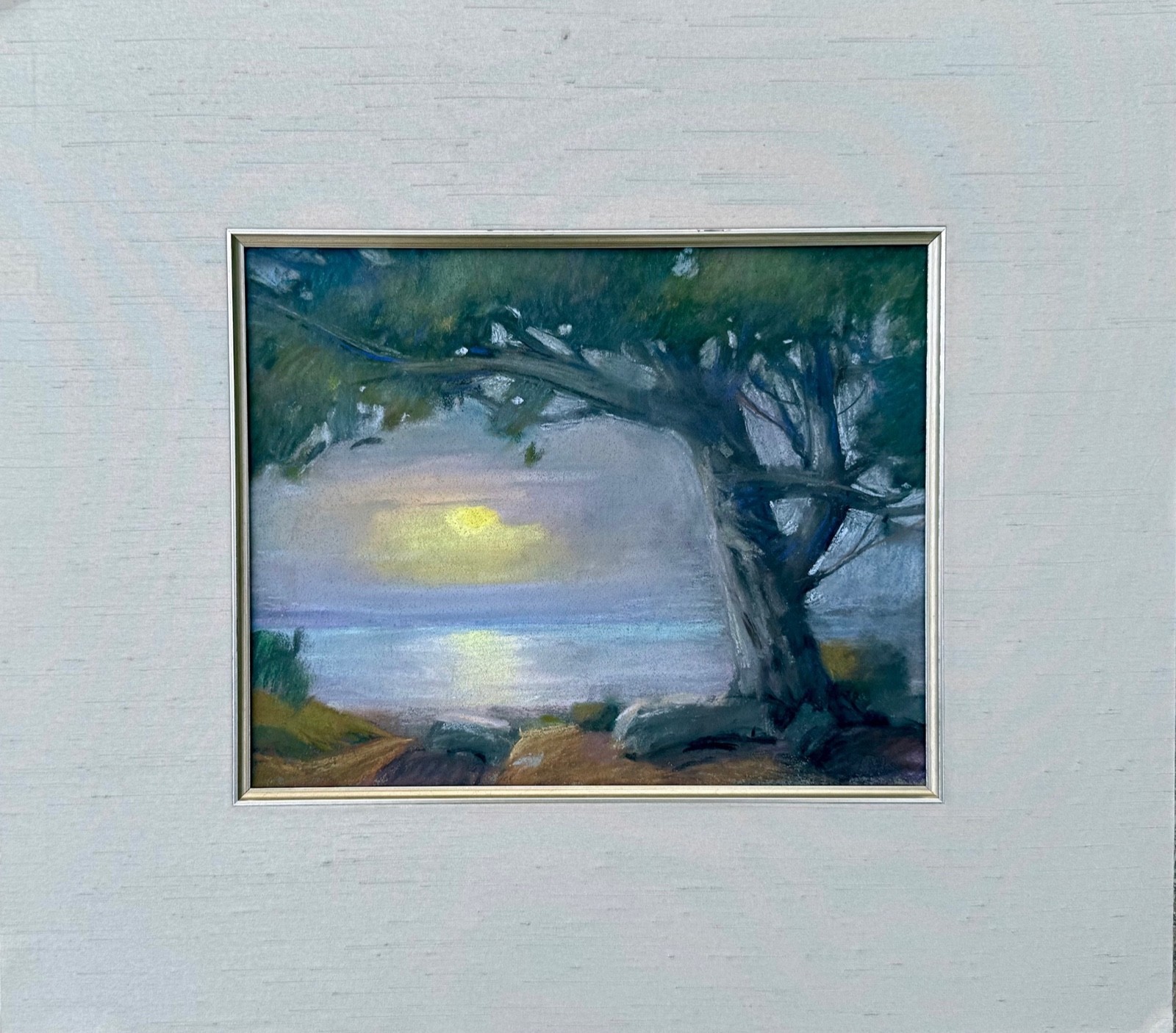
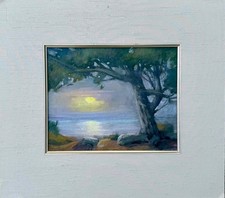
Carmel Sunset
From the Estate Collection
8” x 10”
(Image Size)
14 x 16”
(Overall)
Excellent Condition
$750
(Shipped in HD Cardboard Box for $25.00 in U.S.
17” x 19” x 3” Box
We Have a Selection of Works by the Artist
Arny Karl Biography
Arny Karl was one of a small number of painters who kept alive the long tradition of the romantic landscape. In an age when the shocking and the ugly are championed by critics and when the absolutely banal is considered collectible, Karl's pastel and oil landscapes are prized by those who appreciate the idealized landscape.Karl is best known for his poetic transcriptions of the California and Southwestern landscape. He painted in the Sierra Nevada, along the California coast, in Arizona, and throughout the foothills of the San Gabriel and San Bernardino Mountains. While Karl enjoyed painting under the bright sunlight conditions favored by impressionist painters, it was the stunning colors found at sunset or the quiet hours of the late afternoon and evening that clearly animated him.Arny Karl's childhood in Italy inculcated an interest in the fine arts and a deep love of the natural world. He was born in the Dolomite Mountain town of Balzano in 1940. Karl's Austrian father was a minister and writer. It was his Italian mother, through her interest in design and the arts, who encouraged him in his own artistic development.Throughout his youth, the Karl family moved frequently, first to the large industrial city of Milan, then to Rome and finally to Florence, where most of the artist's school years were spent. An indifferent student, Karl remembers being awed by the art of the Renaissance that surrounded him, but he was almost instinctively drawn to nature as a subject. Seeking new horizons, he immigrated to the United States in 1961. He settled in San Gabriel, east of Los Angeles, where his sister had moved. Initially, he earned his way by working at a variety of jobs, as many new immigrants do. Seeking a practical career that still involved painting, he took a course in commercial sign painting at Pasadena City College.
Because of the necessity of earning a living and a lack of confidence in his own developing art work, Karl sought a career in the outdoor advertising business. In those days of the 1960's, Los Angeles was the center of the outdoor advertising industry and large, colorful billboards towered over freeways and thoroughfares. Hired as a "helper" at Foster & Kleiser, Karl worked his way up the union ladder, until he was able to paint his own billboards. Frustrated by the lack of creativity inherent in commercial work, he dreamt of becoming a fine artist, but realized that he needed further training.
Fortuitously, Barney Sepulveda, one of the more senior men at Foster & Kleiser, introduced him to the iconoclastic painter and Early California master Theodore N. Lukits (1897-1992).
Lukits was a staunch traditionalist and through his work and teaching he helped preserve the ideals and methods of the late 19th-Century French ateliers and academies. Beginning the study of art before the age of ten, Lukits had been trained by a host of gifted painters including the tonalist Edmund H. Wuerpel (1866-1947), American Impressionist Karl A. Buehr (1866-1952), the great muralist Edwin H. Blashfield (1848-1936), and the Art Nouveau painter and Slavic muralist, Alphonse Mucha (1860-1939).