When you click on links to various merchants on this site and make a purchase, this can result in this site earning a commission. Affiliate programs and affiliations include, but are not limited to, the eBay Partner Network.
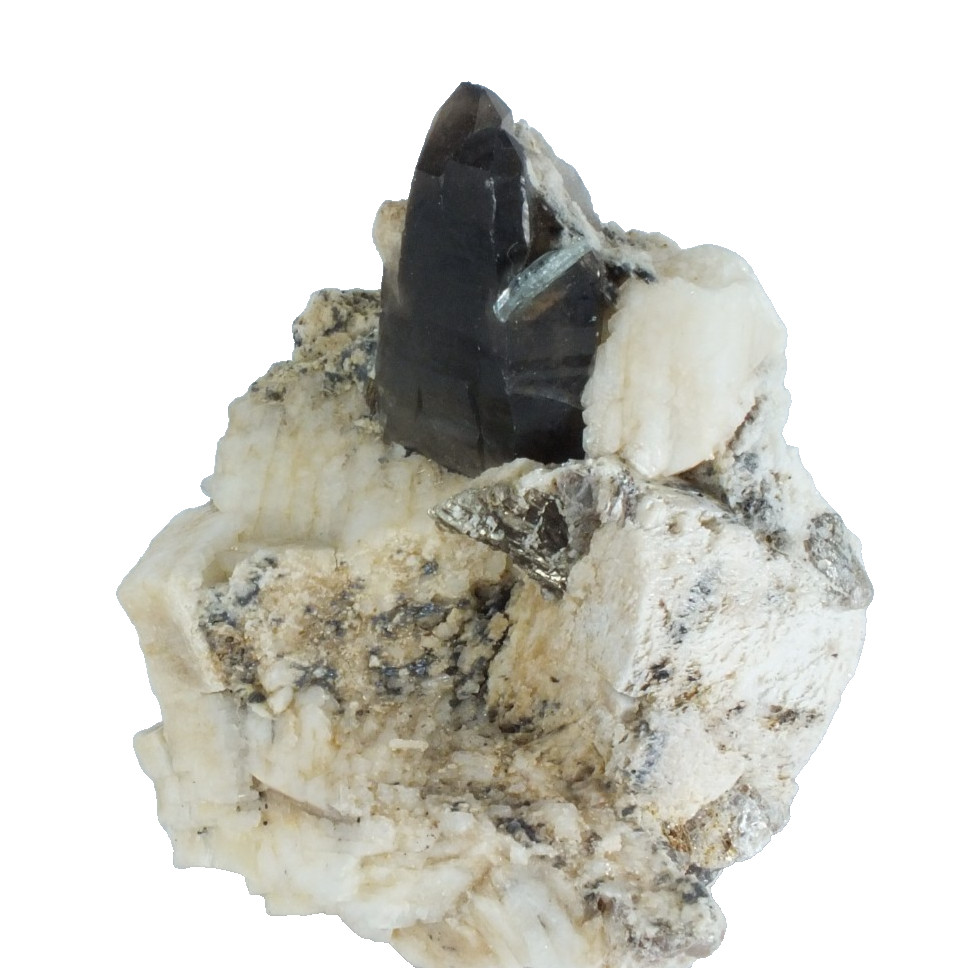
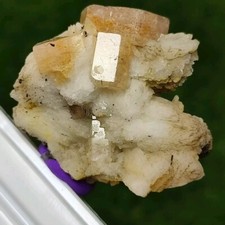
This specimen features a single blue fluorapatite crystal attractively positioned on smoky quartz and orthoclase, collected from the Lake Boga Granite Quarry near Lake Boga, Victoria, Australia. Measuring approximately 55 × 45 × 38 mm and weighing 82 grams, it presents as a well-composed cabinet specimen, with the fluorapatite crystal clearly isolated and visually dominant against the lighter feldspar and translucent quartz. The natural, unprepared surfaces preserve the original growth relationships between all three minerals.
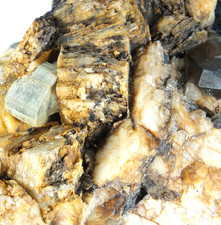
The fluorapatite displays a clean blue coloration, with well-defined crystal faces and a vitreous lustre that contrasts effectively with the smoky quartz beneath. The quartz provides a subtle translucency and tonal depth, while the orthoclase matrix offers a pale, granular framework that anchors the composition. The association of these three minerals is both aesthetically balanced and mineralogically instructive, with each component clearly expressed.
The Lake Boga Granite Quarry is a recognised Australian pegmatitic granite locality known for producing feldspar, quartz, and accessory phosphate minerals such as fluorapatite. These crystals formed during the late stages of granite crystallisation, when volatile- and phosphorus-rich fluids allowed apatite to grow alongside quartz and feldspar within cavities and miarolitic zones. Specimens showing intact crystal associations from this environment are valued for clearly illustrating pegmatitic mineral formation.
Collected during the 1980s and preserved within the J & S Mommers Collection, this specimen carries strong provenance from a respected Australian collection. Its combination of a distinct blue fluorapatite crystal, classic Victorian locality, and well-documented collection history makes it a sound collector-grade example, uniting geological context with refined natural presentation.