When you click on links to various merchants on this site and make a purchase, this can result in this site earning a commission. Affiliate programs and affiliations include, but are not limited to, the eBay Partner Network.
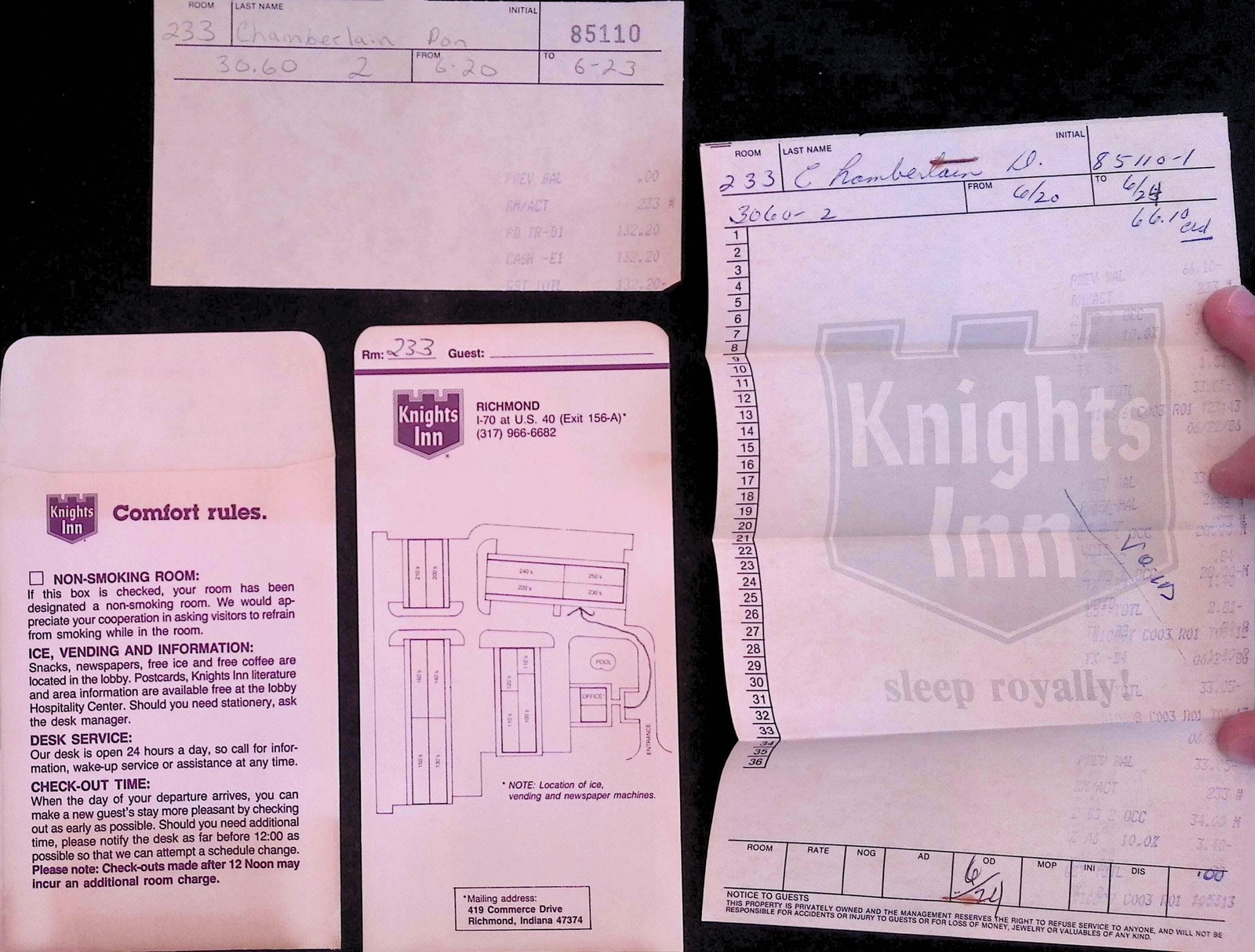
This lot comprises two complementary pieces of printed ephemera from the Knights Inn motel chain, dating to the mid-1980s. The primary document is a guest folio/receipt from the Knights Inn at 419 Commerce Drive in Richmond, Indiana, located in Wayne County. This folio, a standard form for the chain, bears the \"sleep royally!\" slogan and a faint castle-themed logo watermark. The form’s layout, with ruled columns for itemized charges, reflects the standardized billing practices of the era’s budget-lodging industry, which was rapidly expanding along interstate highways. The Richmond location, situated on a commercial corridor, catered to both traveling motorists and business clientele, a demographic shift that the chain’s marketing actively courted.The second item is a Knights Inn guest information card, a tri-fold or single-sheet brochure titled \"Comfort rules.\" This piece is a rich artifact of mid-1980s hospitality conventions. The card, copyrighted in 1985 by Cardinal Industries, Inc. and marked with a July 1985 print date (7/85), details the chain’s operational standards. It informs guests of a 24-hour front desk, free local calls (by dialing 9), and the procedure for long-distance calls, with area codes other than 317, which were billed at checkout. It also lists the television channels available, including ABC, NBC, CBS, ESPN, CNN, and Showtime, with a notable disclaimer that Showtime occasionally broadcast \"R\" rated movies. The card explicitly documents the motel’s amenities, such as a seasonal outdoor pool open from Memorial Day through Labor Day without a lifeguard, and the availability of free ice, coffee, and snacks in the lobby. Significantly, it advertises a range of room configurations—kitchenettes for extended stays, \"Royal Rooms\" with a bed and sofa, two-bed rooms for families, and one-bed rooms for business travelers—as well as a conference room seating up to twelve, illustrating the chain’s attempt to segment its market. The card’s typography, with its clean sans-serif headings and structured layout, is typical of corporate hospitality design of the period. Together, these two items offer a detailed snapshot of the operational and promotional language of a mid-tier motel chain, capturing the everyday commercial culture of roadside lodging in the Reagan era.