When you click on links to various merchants on this site and make a purchase, this can result in this site earning a commission. Affiliate programs and affiliations include, but are not limited to, the eBay Partner Network.
Impressive monumental copper-alloy royal head from Nigeria, in the Edo / Benin Kingdom tradition, representing an Iyoba (Queen Mother).
A substantial and highly sculptural example measuring approximately48 cm (18.9 in) high and weighing 6 kg (13.2 lb).
The head is traditionallyhollow cast by the lost-wax process, with relatively thin walls for an object of this size. The casting retains numerous irregularities associated with the process, including small voids and imperfections, while the interior remains rough and substantially untouched.
The surface displays extensive natural-looking age-related oxidation, deposits and accretions, with localized green copper corrosion products and reddish-brown areas visible particularly around the lower rim and recessed decoration.
Royal iconography
The sculpture belongs stylistically to the celebrated royal artistic tradition of theEdo peoples of the Kingdom of Benin, present-day Nigeria.
The Iyoba—the mother of the Oba, or king—occupied one of the highest positions within the political and ritual hierarchy of Benin. Historical commemorative heads of deceased Iyobas were produced in cast copper alloy for royal ancestral altars. Museum collections identify the characteristic elaborate royal headdress and coral-bead regalia as central elements of this traditionThis example is particularly striking for its extraordinarily elaborate modelling:
- tall conical ceremonial headdress terminating in a large decorated finial;
- repeated concentric solar/rosette motifs across the crown;
- large almond-shaped eyes;
- extensive vertical facial striations;
- multiple curved bands across the cheeks;
- long pendant braided/beaded elements;
- elongated horizontally ribbed neck;
- projecting ornaments around the crown and base;
- extensive hand-modelled surface decoration throughout.
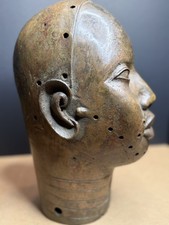
The result is an exceptionally powerful sculpture from every angle, with a particularly dramatic profile.
Construction and condition
The sculpture ishollow and relatively thin-walled, despite its monumental dimensions.
Close photographs of the underside and interior are included deliberately. They show the rough internal casting surface, irregular wall structure and deposits within the casting rather than a subsequently polished or cosmetically finished interior.
Numerous small casting holes and irregularities are visible externally, particularly around the headdress. Such imperfections are inherent to traditional lost-wax casting rather than later damage. Historical Benin heads likewise survive with casting flaws and missing areas; a documented 19th-century Queen Mother head sold by Zemanek-Münster, for example, specifically records minor losses originating in the casting process.There is substantial oxidation, patination, accumulated surface material and general age-related wear throughout.
The object has not been aggressively cleaned or restored.
Please study the detailed photographs carefully. They constitute an important part of the description and intentionally include close views of the casting, oxidation, underside and interiorStylistically and technically it shows affinities with historical royal sculpture of the Benin Kingdom, including monumental Iyoba heads of the later Kingdom period. Museums including the Metropolitan Museum of Art and Weltmuseum Wien preserve comparable Iyoba commemorative heads attributed to the18th–19th and 19th centuries, produced by the specialist brass-casting tradition of Benin.For comparison, documented historical examples can be remarkably substantial: an independently provenanced 19th-century Iyoba head measuring54.5 cmand cast by the lost-wax method sold at Zemanek-Münster for€38,000.
Dimensions
Height:48 cm / 18.9 in
Width:18 cm / 7.1 in
Depth:37 cm / 14.6 in
Weight:approximately 6 kg / 13.2 lb
Material:copper alloy / bronze-brass
Technique:hollow lost-wax casting
Origin/tradition:Edo / Benin Kingdom, Nigeria
Subject:Iyoba / Queen Mother royal commemorative-head tradition
Date:undetermined; stylistic affinities with late Kingdom-period examples
A commanding object of considerable physical presence and a fascinating example of the continuing royal sculptural vocabulary associated with one of Africa's most celebrated metal-casting traditions.
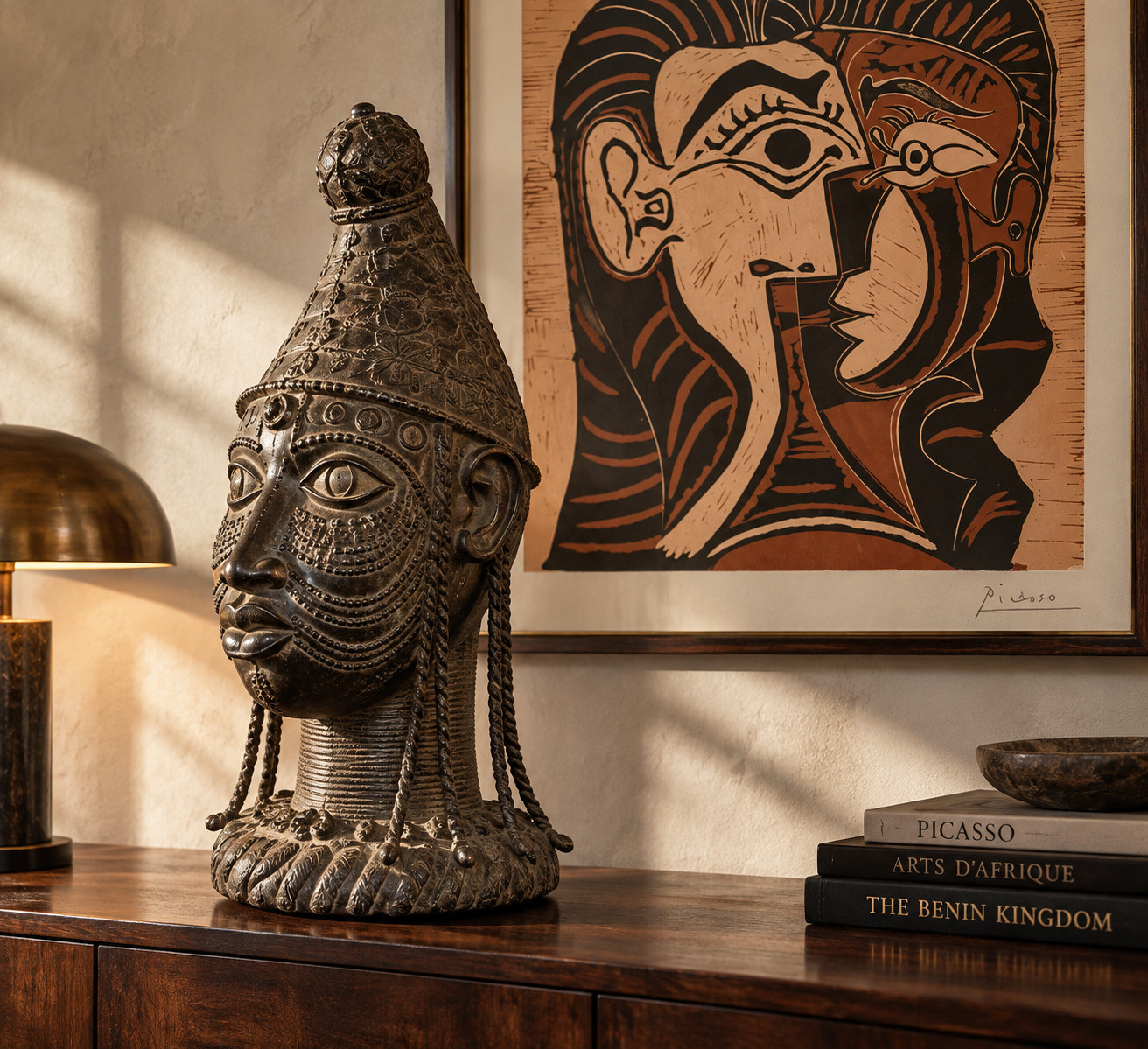
The staged interior photographs are included to illustrate the sculpture at scale in a collector's setting. Please refer to the unaltered close-up photographs for the actual surface, condition, casting and patina of the object.
Please take a look at my other listings as well. I add a handful of interesting European and international covers, letters, stamps and postal-history items almost every day, alongside historical oddities and other collectibles. Combined shipping is available whenever possible.