When you click on links to various merchants on this site and make a purchase, this can result in this site earning a commission. Affiliate programs and affiliations include, but are not limited to, the eBay Partner Network.
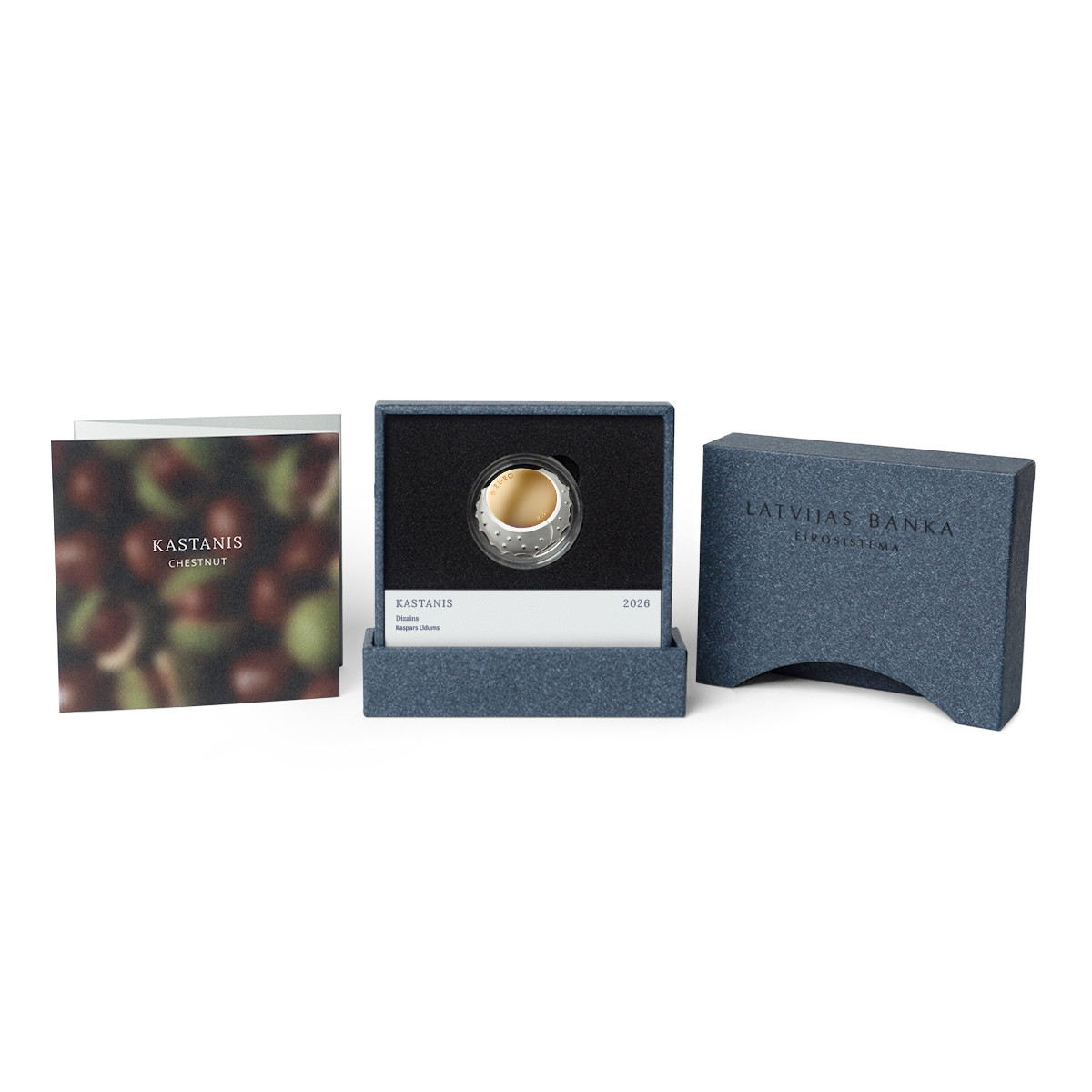
📌Item Condition:Presale / Brand new in original packaging (OIP)
🏳️Country of Issue:Latvia 🇱🇻
📅Year of Issue:2026
🪙Face Value:€5
💎Quality:PROOF (the highest minting quality)
🧪Material:.999 fine silver (partially gilded / with an applied element)
⚖️Weight:23.00 g
📏Shape & Diameter:Irregular shape; maximum diameter 35.00 mm
🔢Mintage:Strictly limited tojust 3,000 pieces worldwide!
🏛️Mint:Lithuanian Mint (UAB Lietuvos monetų kalykla)
🎨Artist:Kaspars Līdums (graphic design)
The horse chestnut (Aesculus hippocastanum) was introduced to Latvia around the 17th–18thcentury, first appearing in the parks of manors. It became a favourite tree for lining roads and avenues and for planting beside homes, valued for its rapid growth, shelter from the wind, and magnificent blossoms. Many chestnuts have grown into venerable trees, reaching at least 23m in height and 3m in circumference. One such tree stands at Billītes, home of writer Edvarts Virza in Jelgava Municipality. It served as the inspiration for the great chestnut in his workStraumēni. Beneath it, the household and their guests gathered to celebrate or rest. The Latvian painter Vilhelms Purvītis, while living in Tallinn in early 20thcentury, immortalised a grove of trees in his paintingBlooming Chestnut Trees. Sweet chestnut trees (Castanea sativa) also grow in Latvia, mainly in Kurzeme. From its spiny husk emerges a brown, smooth, and round chestnut fruit, cherished in Latvia both as a plaything and a folk remedy. Carrying a chestnut in one's pocket is believed to protect against misfortune. For women, good fortune is associated with a chestnut in the left pocket; for men, in the right. The chestnut coin is a talisman, embodying the positive qualities of the tree and its fruit. In Latvian, the word for chestnut tree is used in both the masculine (kastanis) and feminine (kastaņa) gender. The tree, and now the coin, belongs to everyone. May you always have a chestnut in your pocket!