When you click on links to various merchants on this site and make a purchase, this can result in this site earning a commission. Affiliate programs and affiliations include, but are not limited to, the eBay Partner Network.
What exactly is a Fermented Fertilizer, and how does it benefit me and my garden?Before getting to anything else it is important for those who are viewing this listing to know what exactly this item is, before anything else.TL;DR Fermented Fertilizers are Organic Fertilizers that are ready to use like regular bottled liquid nutrients, but need to be diluted, they feed not only the plant but the soil and soil microbes, are more nutrient dense, and have a vaster nutrient profile than traditional commercial NPK Fertilizers, are healthier for you and the plants, and are a vastly superior fertilizer compared to traditional commercial NPK Fertilizers and even more of the organic offerings you find as well.More In Depth:Fermented Fertilizers come in a few different types, but they are all basically the same in that they are all an
- Organic Liquid Fertilizer
- that is ready to use right away
- completely plant available
- full of nutrients and minerals to support your plant\'s health and maximum growth potential.
The Difference Between Most Organic and Synthetic(Chemical) Nutrients is that the Synthetic nutrients are created only for plant absorption, but in Organic and specifically the \"Living Soil\" way of Gardening, we are about the Microbes in the Soil, which means we look to FEED THE SOIL/MICROBES which then feed the plant. With Synthetic Nutrients, they bypass the Microbes and just feed the plant causing the microbes to have no food which causes them to starve off. Organic Inputs allow the Microbes to feed and grow, and build the soil which in turn creates healthier plants.
What is an \"Input?\" Essentially, an Input is any Organic Nutrient. Kelp/Seaweed, Blood, Eggshells, Bones, Fruits, Plants, Veggies, Food Scraps, Fish, etc, etc. Anything that can be made into a Fertilizer is an \"Input.\"
So what happens is the microbes will essentially eat and digest the organic inputs and then expel/output plant available compounds into the soil, similar to how Compost Worms make \"Worm Castings.\" The thing with Organic Inputs is that it takes time for the Microbes to break down the inputs into usable nutrients for the plant, and depending on the input and how it\'s handled, can take YEARS for the input to be fully broken down, such as EGGSHELLS... That isn\'t even considering if you don\'t have a well established soil microbiome it makes it even harder and longer to get to work to get those Plant Available Nutrients.... So how exactly do we make it easier and faster to get these Organic, Living Soil Nutrients out Plants need?This is where Fermented Fertilizers come in.
Fermented Fertilizers are essentially liquid nutrients already fed on by microbes, so you have completely plant available High Quality Organic Nutrients ready to go. Not only do you have these High Quality Plant Available Nutrients ready to feed your plants right away, but you also have all of the microbes that have been feeding on the Organic Inputs, as well as the leftovers of the Organic Inputs to keep on feeding the microbes in your nutrient bottle, as well as in the soil once added to the soil. So Fermented Fertilizers
- Not only Feed the Plant
- But feed the Soil
- Add Microbes to the Soil
- Feed the Already Existing Microbes in the soil
- Feed the Worms, Fungi, etc in the soil
- and do all this with Higher Quality Nutrients and a much vaster Nutrient profile than Synthetic Nutrients
So you get so much more with a Fermented Fertilizer than just an NPK Fertilizer, you get much more nutrients because Synthetic Nutrients focus on NPK instead of Organic Nutrients that would contain large quantities of Minerals and Elements such as Seaweed/Kelp which is said to contain over 100 different kinds of minerals, you get Soil Microbes from my local Farm Cow\'s Milk which contains the same Lactic Acid Bacteria(LABs) that the soil contains because it gets that bacteria from eating grass and the dirt on the ground which gets passed along to the milk and the cycle then continues.
In the end this is a vastly superior product compared to the traditional NPK Fertilizers, and offers benefits not only benefits to plants, but to the soil, soil microbes, soil animals such as worms, and your health and the health of your plants.These sorts of Fertilizers are overall just better for everything and everyone, and the results speak for themselves. You also do not need to flush your plants or worry about anything about the fertilizers affecting taste like you would with a traditional commercial fertilizer, as there\'s no need to worry about chemical exposure or concerns. These fertilizers and inputs are completely 100% organic and you can eat the inputs if you wanted. Inputs such as Pork Bones come from Bones I made from Soup Stock.... Cow\'s blood could be used to make blood sausage, etc, 100% Edible. I wouldn\'t eat the Kelp or the Alfalfa, but you could if you wanted to. The Food waste is leftover food scraps I didn\'t eat. Aloe from my garden, peanut water from peanuts I ate, eggshell calcium fertilizer, watermelon fertilizer, etc, etc all are nothing to worry about. Even as a Liquid Ferment there\'s nothing really to worry about, even though I wouldn\'t want to drink it at this point anymore, as it would be nasty at this point, lol. You don\'t need gloves, and I\'ve had some splash/spray in my face and there\'s no worry at all, no need to freak out and wash your face off. If I get sprayed I just continue on like nothing happened. I\'ve even got some in my mouth before, no big deal, you can just rinse it out and continue on. I wouldn\'t say the same about a commercial fertilizer in those situations, though.
This Fermented Fertilizer is meant to be diluted in water, usually at a ratio of an average of 1 oz per gallon of water, but can be as low or as high as one needs for their plant\'s success.
I personally mix1 pint (32 oz) of my Fertilizer Fix into a 5 gallon bucket,
which ends up at about 6 oz per gallon, and there are over 10 fertilizers in the mix, so it ends up about 0.5-1oz per fertilizer per gallon per watering for me.
These Liquid fertilizers should NOT burn plants at all, even in high doses when foliar feeding, even during hot/bright sunlight, but it is recommended to foliar feed when it\'s not that sunny out at the start or end of the day.Any questions at all, please do not hesitate to send me a message, I am HAPPY to help!On to the I have a couple dozen Different Fertilizers, some are listed, some are not. I also have dry amendments in case people are interested, i.e., Alfalfa, Kelp, Insect Frass, Biochar,etc. If you have any questions or are looking for anything specific please send me a message and I will do my best to help you out!!!!! Current Fertilizer Listings1. Liquid Fermented Potato Extract(High Potassium, High Microbial, Microbial Starter) - Liquid Fermented Kelp Extract (Vast Mineral/Nutrient Profile, Plant Growth Hormones) - Liquid Fermented Neem/Karanja Extract(Soil Conditioner, Pest Management, Good/High Mineral/Nutrient Profile) - Liquid Fermented Eggshell Extract(High Calcium, Vast Mineral/Nutrient Profile, Good Mineral/Nutrient Amount) - Liquid Pinto Bean Compost Extract(Vast Mineral/Nutrient Profile and amount) - Liquid Biochar Extract(High Carbon, Soil Conditioner) - Liquid Fermented Cow\'s Blood Extract(Vast Mineral/Nutrient Profile, EXTREMELY HIGH NITROGEN) - Liquid Fermented Pork Bone Extract(Vast Mineral/Nutrient Profile Extremely High Potassium, Calcium, Silica) - Liquid Fermented Alfalfa Extract(Vast Mineral/Nutrient Profile, Plant Growth Hormones) - https://www..com/itm/267445388088No Listing Yet But Fertilizer Available10. Liquid Fermented Watermelon Extract (High Nutrients, Potassium Rich, Fruiting Fertilizer)
11. Liquid Fermented Insect Frass Extract - (Moderate Nutrients, Minerals, Positive Stress Induction)
12. Liquid Fermented Fish Extract(Hydrolysate) - (High Nutrients, High Nitrogen)
13. Liquid Fermented Aloe Extract (Large Nutrient/Mineral Profile, Growth Hormones)14. Vegetative Mix (A mixture of all of my fertilizers that would be best for Vegetative Growth, basically includes all of my fertilizers).15. Fruiting/Flowering Mix (A mixture of all of my Fertilizers that are Low/No Nitrogen, that are best suited for plants that are in the flowering and fruiting stages of growth.Unsure If Selling Fertilizer16. Liquid Fermented Apple Extract (While I have a couple of Apple Buckets, I\'m not fully sure about Apple\'s Nutrient Profile. I thought they were higher in Potassium, but from what I read it seems like they aren\'t, so I\'m not sure how good of a Fertilizer this would be compared to the Watermelon).
17. Liquid Fermented Food Waste Extract - (I have 2, going on a 3rd, Buckets of \"Food Waste,\" which is essentially as the name implies, Food that I didn\'t finish, went bad, etc, etc, that I put into a bucket. These Buckets are very high in nutrients, very high in nitrogen, but I wasn\'t sure if people would want a bucket made from random food scraps. All of my food, just like Fertilizer Inputs, Comes from Small Farms, mostly Amish, all with a extreme need to provide Chemical-Free food).
18. Fermented Milk Extract(Lactic Acid Bacteria[LABS]) - (Large Nutrient/Mineral Profile, Microbes) I\'m not sure if this is something people want. I know people want LABs for their gardens/soil, but I don\'t make LABs how you see it with ricewater and milk and such. I use straight Milk that isn\'t Heated, Fresh from Local Cattle that contain a plethora of not only LABs but other bacteria. The thing is, these Buckets are over a year or 2 old, so I\'m not sure how active the microbes are in the liquid, as I don\'t feed them, they should last for a very long time though, and many of the microbes should come back from dormancy after getting a food source. It is still a fantastic fertilizer nutrient-wise, but the bacteria-levels I\'m not fully sure of. I do think this is something people will want, though.19. Microbial bucket from leftovers of LAB ferments such as Sauerkraut, Kimchi, Pickles, Sourdough yeast leftovers, etc. (Good Nutrient/Mineral Profile, Microbes) The same as above, I\'m not sure how active the microbes are, since I\'ve been adding leftovers over time. IT should still be good and just like above many of the microbes should come back from dormancy after getting a food source in the soil after application.
20. Liquid Fermented Peanut Extract - (I\'m not fully sure about this one because a large portion of the bucket is made up of water from soaking peanuts, and a good amount of peanut liquid is extracted and that all goes into a bucket. I also put a bunch of burnt or not edible peanuts into the bucket as well, so it has a variety of peanut source in it. My issue is that I\'m not fully sure how potent the extract is, as well as I\'m not fully sure how nutrient dense this extract is. Peanuts should be high in Potassium, and I would think high in Nitrogen because Peanuts are \"Nitrogen Fixing... From a quick search what I see \"Peanut Meal\" has an NPK is 8-1-2 or 8-1-1 so higher in Nitrogen than Potassium. I also noticed that this bucket has a MASSIVE amount of mold and fermentation compared to most of the other buckets, so peanuts being underground might have a relationship with those underground bacteria and those flourished in the bucket, compared to watermelons or another fruit/crop that would grow above ground).
21. Liquid Fermented Garlic/Onion Extract - This was initially made as a pest-management option, but I haven\'t really used it at all, nor do I know it\'s effectiveness. It might be a good balanced Fertilizer, but I\'m not sure if it\'s worth it to actually list or if anyone would want listing is for A HALF Gallon of Biochar Extract Liquid Fertilizer.About the Fertilizer:
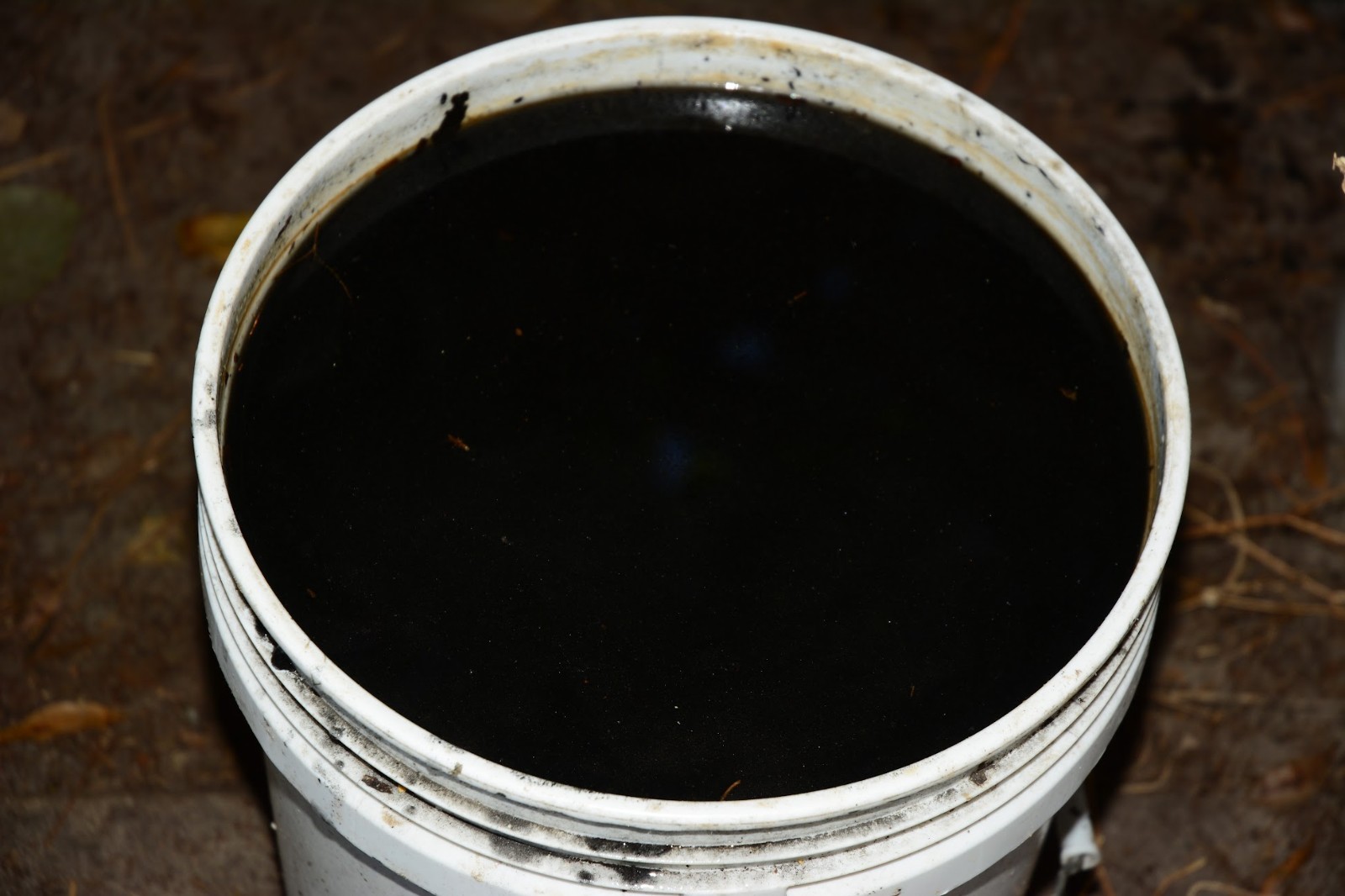
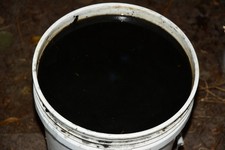
This BiocharExtract Liquid Fertilizer was started I believe sometime last year in 2024. I\'ve done a few of these buckets so I\'m not really sure when i started this one, but it has to be AT LEAST a year old. This Biochar fertilizer was made in a 5 gallon Bucket, with Biochar from an Organic Online Retailer as well as rain water to fill up the bucket. (Note: If you want to purchase more then 1 gallon of Fertilizer contact me to get a deal on multiple gallon bottles).
About the Fertilizer Inputs:
In the Organic Gardening World, Biochar is known to be full of Carbon, but it contains other trace minerals and nutrients as well, including Potassium(Potash).
Biochar is known to help revitalize soil and help with nutrient retention and uptake in the soil, which then helps plants and roots uptake nutrients better.
Biochar in it\'s natural form is also a very good input for microbial life, as it is extremely porous which microbes thrive in, as they like to go into the small crevices in order to multiply and grow.
Biochar\'s porous nature allows it to soak up and absorb other nutrients, allowing to to be \"Charged\" allowing slow release of nutrients over time as the biochar breaks down, as well as additional food for the microbes that are living in the biochar.
In Gardening, Biochar usually come in a woodchip like form. Biochar is created by heating wood to the point it catches on fire, and then quickly smoldering the wood by covering the wood, which apparently allows the wood to go through a certain process. The wood is usually placed inside a hole and then a piece of metal is used to cover the hole to smolder it. Some claim that Charcoal is the same as biochar, but I\'ve read that there is different processes involved in the making of each. Many claim it is the same though, but I am not fully sure. Regardless if it is the same, Many Charcoal products on the market aren\'t the cleanest anyways, so that is a concern, and this means The end product of \"Charcoal Biochar\" is actually not an Organic product, because it does not come from Organic Sources. Most Charcoal on the Market is this way.
My Biochar is much different. I acquire actual biochar from a online organic retailer that gets the biochar from forests of woods that have been dealing with beetle infestations. It allows for the wood to be processed while getting rid of the invasive beetle problem. Since this wood comes from unsprayed, untouched forests deep in the mountains, the wood is extremely clean. Then the wood goes through actual biochar processing and what we are left with is small chunks of wood, not the large chunks you get from charcoal.So overall this means this Biochar is much cleaner than not only any commercial charcoal you would get, but also many of the biochar offerings out there.
Overall this Biochar Fertilizer is packed full of Carbon to help your Plants Grow huge, but it also revitilizes the soil and helps with soil retention of nutrients.
Input Sourcing
I am someone who is also extremely strict with where and how I source not only my fertilizer inputs, but also my food as well(which has some overlaps with each other in the case of The Fermented Bone Fertilizer).The Biochar is sourced from an Organic Retailer dedicated to Organic and Chemical Free inputs that is very strict about vetting their products as their products are used for Plants meant for Medicine. The Biochar itself comes from Forests Deep in the Mountains of Colorado where clean water and nature exists without chemical sprays and pollution affecting it. The area has been experiecing invasive beetle issues for a number of years now, so in an effort to help combat it and remove trees that have been destroyed by the beetles, a company has taken these trees and turned them into clean Biochar for organic and chemical free gardeners like ourselves.
Have faith in getting a Liquid Fertilizer made from the finest chemical free and organic inputs!About me and my operation.
I am someone who is relatively new to Gardening. I started my Gardening Journey in September of 2022, which makes me 3 years into this Lifestyle/Hobby. I started Gardening because I wanted to grow my own Food since it was extremely hard to find Clean, Chemical Free Food around me, since I have been very strict with what I eat and where I source my food from since 2018. I only purchase from a handful of Small Farms that I vet and make sure are up to my \"Standards.\"
I have always been someone who has liked to do things on my own, as I come from a Software background being a Self Taught, Developer, so when I got into Gardening I wanted to learn all about it, especially when it came to Organic and Chemical Free Gardening. I ended up finding out about Soil Amending and Fertilizer making right away into my learning, and the rest is history.
My initial start to making my own Fertilizers was around September - October 2022. I started with a few Ball Jars with Fermentation Lids, Fermenting some Fish Heads and parts from a Local Fishery that is on the Gulf Coast of Florida, that has their own crew of Fisherman who catch Wild Caught Fish in the Gulf. I started Fermenting these fish heads in my closet, and that was the start of my Fermentation Journey.... and man the small was out of this world at first(It just stunk bad), but then it turned into a nice, tomato-type smell, very interesting. From there I created a few other fertilizers in Ball Jars, including one with some food waste such as tomatoes, and started my journey with a very small garden in a 5x3\" area inside my home. From there I expanded out to 5 gallon buckets for these few Fertilizers I made, while also expanded my Garden outdoors into a 60 foot x 15 foot or so area.
3 years Later, I now have 35-40 or so Buckets filled with Fertilizers of all types, some are duplicates such as my Fermented Bone Fertilizer or Fermented Watermelon Fertilizer, but I have a large variety I have created over the years. Many of these Fertilizers if not all of them, such as the Fish Fertilizer, are still the Original batch from years ago. This is because many of these fertilizer inputs, such a bones, take YEARS to break down. You can speed up this process by grinding the inputs into paste with a blender, which is something many people do, but I do not. I believe in doing things naturally and letting nature take it\'s course.this brings me to my next point....
Process for Making Fertilizers
I am not someone who is very strict and meticulous with regards to making these fertilizers. I believe in Nature, and Nature works in it\'s own way.
I do not work in a Sterile Lab/warehouse/environment, I do not take exact measurements, I do not blend or break down these inputs besides crushing eggshells with my hand or simmering bones to allow them to soften up to break down naturally.
Many others will tell you to use X amount of input that has been blended into a proper consistency, per Y amount of Lactic Acid Bacteria to start the Fermentation, to Z amount of Sugar, to Q amount of water and then after W amount of Weeks you should have a product with a PH of P.... or else the fermentation failed.... and I just not only don\'t follow these strict rules and guidelines, but I don\'t believe in it.
So because The PH of a batch isn\'t at what someone believes it should be at, in a 2 week time deadline, that means it somehow is a bad batch and everything is ruined and failed? There are so many factors that can affect things, but to put time limits and such onto a ferment is silly, and it also tells people that their hard work is somehow not good enough, because it didn\'t fit some rules and guidelines, which causes many to feel discouraged, waste money, and ultimately give up. I have watched batches go dormant and then weeks later there is massive amounts of activity. Not only fermentation activity, but also mold and other growth in and ontop of the fermentation liquid. Nature works it\'s own way, again, it\'s not a sterile lab where everything is controlled.
Speaking of Mold and growth on top of liquid, this brings me to another point. Some will claim that mold is not good, and this can ruin a batch, or there is something wrong with the seal and it should be fully sealed, etc. While others say this is life and life is a good thing.
My personal thoughts on this
I believe that as long as we provide the proper nutrients and \"Fuel\" for ferments, then the ferment should be able to produce an end product that will be more nutrient dense and bio-available than what we started with, it might just not be in the proper amount of time that some claim it should be in. It also might not be at the exact PH that some claim it should have... But the effects will still be there.
If we took these inputs and put them into the soil they would still require time to break down naturally, I just took the inputs and suspended them in water to ferment and break down, instead of fermenting and breaking down in the soil. The water helps naturally erode the inputs faster, while giving an environment for the microbes to multiply and act quickly.
I also believe that the presence of mold and other organisms are not only not a bad thing, but are a good and beneficial thing. Having mold means there is life. The Point of Fermentation is to allow the Microbial life to flourish and digest the inputs to make them bio-available. Having Fungal and other types of life in the mix is beneficial, why wouldn\'t we want that?! I even sometimes have flies get inside my fertilizer buckets and I will have larvae floating around. The larvae and flies also digest and release frass(waste) which is beneficial and bio-available to our plants.
This is nature taking it\'s course, and this is again why I am not a fan of a \"Sterile Lab-Type Environment.\" Nature allows for so much to happen, so many benefits that we haven\'t discovered or learned about. Some people will take it to the extreme, though. They want a completely sealed product with a fermentation airlock to make sure no mold or anything can get in, and then have all their variables exact, to create an end product in X weeks, at Y PH, etc... Again, this isn\'t natural. Nature doesn\'t work this way. Maybe you get a good product, but you\'re missing so much more that could be. It\'s similar to the whole \"NPK\" and Synthetic route, and why we choose Organics with the microbial, hormonal, etc route. NPK can give you product from start to finish, but as many of us learned there is far more to making a real good, healthy, tasty plant, and that there are so many other nutrients, as well as other benefits to make our plants thrive even more. So when you allow nature to take it\'s course, you allow for a much more nutrient dense, and better product filled with TONS OF LIFE. At the same time, with regards to Microbial and Mold Life, if we add the Inputs directly to the soil, we will also get tons of mold, fungus, mushrooms, bacteria, and even insects, worms, flies, etc, that all play a part in helping digest and make these inputs bio-available for our plants, it\'s exactly the same as in the buckets, which is another reason why I am against the Sterile environment where everything is measured exactly and done in a way to create an exact process every single time.... Which to me isn\'t natural.
So overall, in my case, Where I have inputs that are constantly breaking down.... There is going to be shifts and changes to the PH, Nutrients, Life, and Bio-availability of nutrients, as time goes on. All of this, and how long it takes the nutrients to become fully bio-available, depends on what sort of life, besides the initial \"Lactic Acid Bacteria\" exists. So essentially, as time goes on while I not only use the fertilizers, but also refill the fertilizers with more rain water to continue the fermentation cycle, there will be continual shifts in the above.
This also means 1 more thing, and the most important thing... My measurements and concentrations will not be exact every time. Since these inputs take time to break down, the concentration will differ and change over time. The longer I let them ferment, the more concentrated the ferment, but this also means I cannot be exact and provide a product that will be 100% consistent every time. Even If the fermentation process was exact every time, the other issue is that I do not measure inputs exactly when I fill a bucket. I usually had filled my buckets about 1/4th full, which is much more than they should have been filled for a ferment. I\'ve read some people say you should do 1:20 input:water or 1:100, so the ferments I have are much more concentrated, and there is much more material than there should have been, compared to what others recommend. For example, the bone bucket not only takes forever to break down... But I was constantly adding more bones as I was using the bones up. The bones come from Ham Hocks which I make a soup out of and then I put into the bucket when ready. There are at least a dozen pound of bones in the first bucket, that has been fermenting for a couple of years now. I recently made a second bucket but there was no measuring that either, but it probably has 5-10lbs of bones in it.
Another issue is that even if I was 100% consistent in everything, my buckets are outside in nature, which means that when the temperature is hotter, the liquids will evaporate water, which is something that is out of my control, even if everything else is in my control.
What does this mean for the product and you customers? (10/22/25)
Even though there isn\'t 100% consistency, I believe in providing a quality product. Regardless if there is consistency or not, the amount of input that went into these buckets initially should be far greater than other sources that not only usually use less initial product in their ferments, but also will DILUTE the end product(and also ferment for less time). The concentration I provide should make both the people who purchase it, and their plants, happy. My plants love these fertilizers.
I am a seller who believes in being honest and up front, as well as I believe in being the best seller I can be for my buyers. My response for the last 3 years of selling off my Tech Collection(to fund my garden/farm lifestyle) reflects my devotion and dedication to not only my products, but also to the customers who buy my products. While I do not believe there will be any issues with these Fertilizers and the concentration (it should hopefully be more concentrated and stronger than similar products), if there are any issues with a batch or bottle I will try to make it right to the best of my ability.
I also will try my best to keep batches as consistent as possible. Even if I don\'t have consistent input amounts, and I cannot track how fast it not only breaks down, but how fast the water evaporates.... I can and do notice how dark and concentrated each batch is when I\'m taking some out, so I can follow the color and concentration as a guideline to keep things more consistent. I also, for future batches, will try to keep inputs more consistent. I initially created these fertilizers for myself, so there was no need to care about consistency, but since I am looking to start selling these Fertilizers (As of 10/22/25) I should try to be more consistent with things. Even though, as mentioned above, for some inputs even with consistency it takes time to break down. I do feel that at least having some consistency and have the variables be the same, that it could be easier for me... But even so, the breakdown that takes a long time could affect all that, so it might not matter. Either way... I will not only try my best to create a consistent/great product, but make every buyer satisfied with their purchase.
I really appreciate everyone who looks at these listings for my Fertilizers, Thank you!Some Additional Fertilizers: