When you click on links to various merchants on this site and make a purchase, this can result in this site earning a commission. Affiliate programs and affiliations include, but are not limited to, the eBay Partner Network.
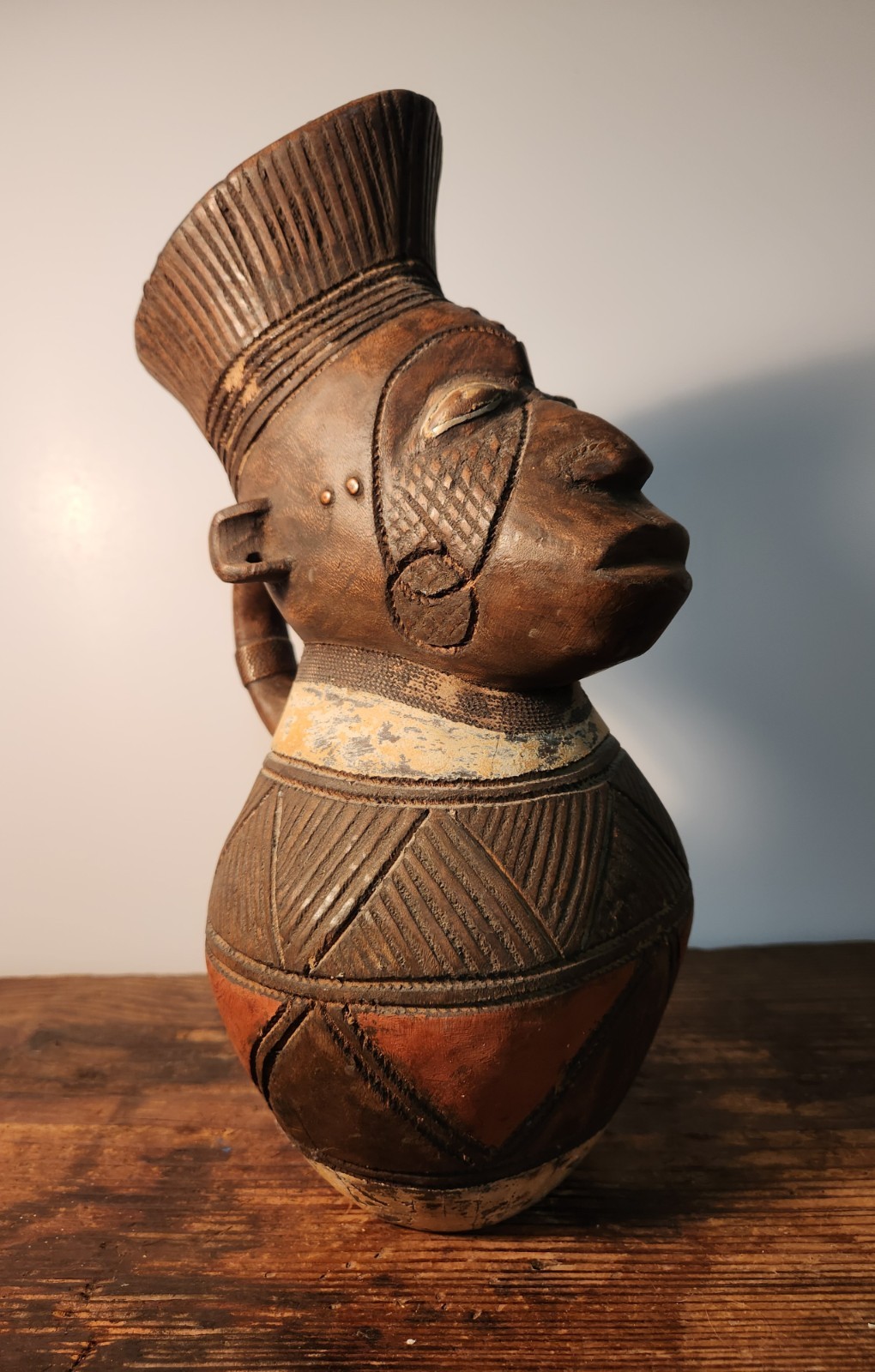
The original source of this ritual pouring vessel is instantly recognizable as the Mangbetu tribe of northeast Congo, near the border with Sudan, the original homeland of the Mangbetu people. Tribal tradition requires that baby's heads be bound so that they develop into a narrower, higher crown than usual. This particular example has tribal scarification and the flared, halo-like hairstyle/headdress that has long been identified with the Mangbetu.
In addition to the incised patterns, the terracotta form is painted with a reddish earth pigment and white kaolin. It is 12 inches high, 7 inches deep and the circumference of the bowl is 18 inches. It probably dates from early to mid-20th century, and was acquired in the 1980s by a discerning collector of African ethnographic art.