Heat.net Store Home
|
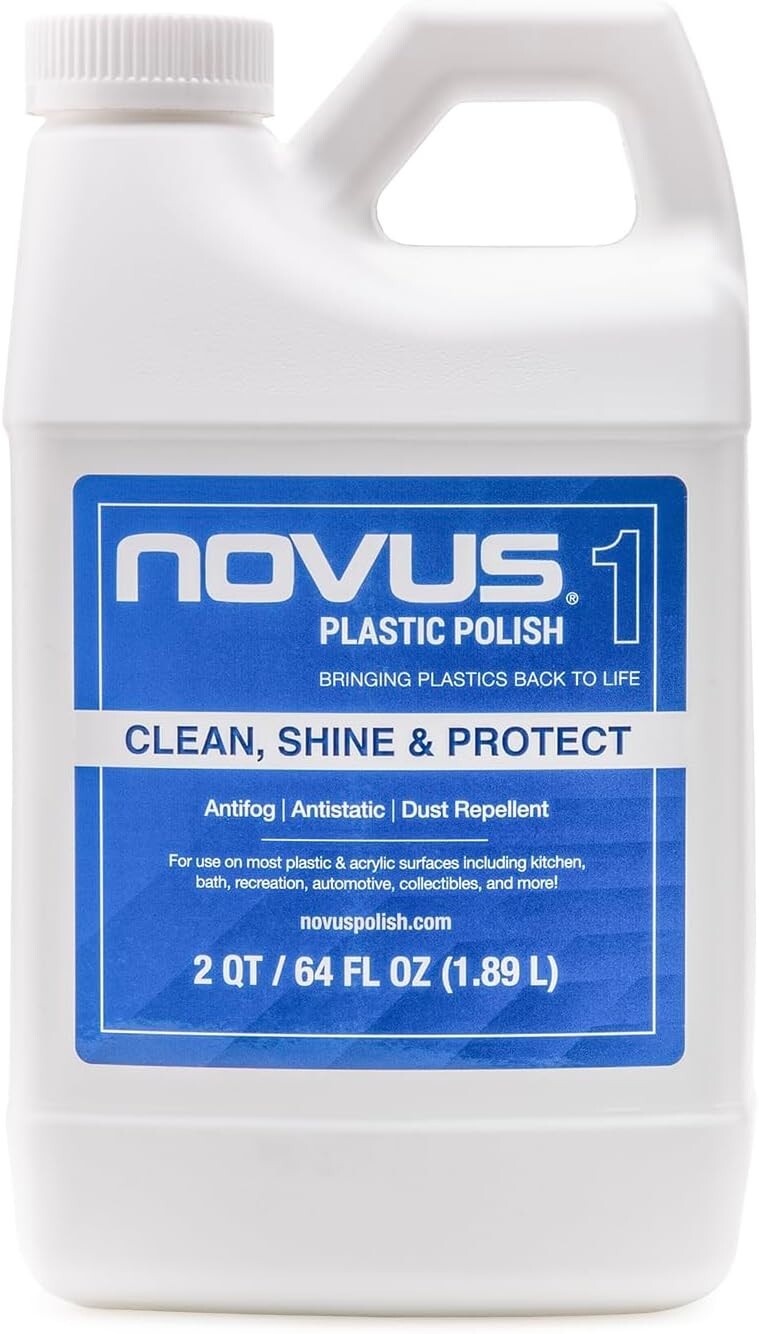
Novus #1 PC-108 Plastic Clean & Shine, 64 oz. Jug For Sale

When you click on links to various merchants on this site and make a purchase, this can result in this site earning a commission. Affiliate programs and affiliations include, but are not limited to, the eBay Partner Network.

Novus #1 PC-108 Plastic Clean & Shine, 64 oz. Jug:
$26.99
Novus #1 PC-108 Plastic Clean & Shine, 64 oz. Jug - Description
Looking for the best way to clean and shine your plastic or acrylic? NOVUS 1: Plastic Clean & Shine gently cleans all plastics without scratching. It will leave your plastic and acrylics with a lustrous shine that resists fogging, repels dust, and eliminates static. - Great for cleaning CD/DVD, motorcycle windshields, boats, airplanes, aquariums, and all acrylic products
- Contains no abrasives or harsh chemicals
- Leaves a smooth, clean, greaseless shine and resists fingerprints
- Cleans all plastics
- WHAT YOU GET
(1) Novus 1 64oz Bottle - NOVUS 1 INSTRUCTIONS
- If the surface is extremely dirty, apply NOVUS No. 1 liberally and wipe using long, sweeping strokes. Do not use pressure at this time or large dirt particles may scratch the plastic.
- Re-apply NOVUS No. 1. Polish using short, circular strokes with a clean portion of the cloth.
- When surface is thoroughly clean and uniformly covered, buff to a slippery glaze with a clean portion of the cloth. Surfaces buffed to a high glaze are more resistant to dust and future scratching.
- Reapply NOVUS No. 1 regularly to maintain the antistatic, smudge and scratch resistant properties.
- NOVUS 2 INSTRUCTIONS
- Observe condition of the surface to be treated. The deeper the scratches, the greater the pressure required to remove them. If the surface is dirty, clean with NOVUS No.1 before applying NOVUS No. 2.
- Shake well. Test in an inconspicuous area.
- Apply NOVUS No. 2 liberally. Using a clean, soft cloth, polish with a firm back-and-forth motion at right angles to the scratches. Keep the cloth saturated with polish at all times.
- When the worst scratches have been polished out, reapply NOVUS No.2 uniformly in a circular motion to the entire surface using short, circular strokes and light pressure. Allow to dry to a light haze.
- Using a clean portion of the cloth, buff the surface to a slippery glaze using firm, short strokes. This procedure is imperative in achieving the best results.
- For heavy scratches, multiple applications of NOVUS No. 2 or application of NOVUS No. 3 may be required.
- Follow with NOVUS No. 1 for best results.
- NOVUS 3 INSTRUCTIONS
- Shake well. Test in an inconspicuous area.
- Apply NOVUS No. 3 liberally. Using a clean, soft cloth, polish with a firm back-and-forth motion at right angles to the scratches. Keep the cloth saturated with polish at all times.
- Continue polishing until only fine scratches remain. Using cloth, remove all remaining polish, this is very important!
- Using a clean cloth, apply NOVUS No. 2 in a circular motion uniformly to entire surface. Polish using light pressure until NOVUS No. 2 dries to a light haze.
- Using a clean portion of the cloth, buff the surface clean. Follow with NOVUS No. 1 for best results.
- RESTORE HEADLIGHTS
How to Restore Headlights - ApplyNOVUS 1 Clean & Shineto the headlights and wipe with a clean, soft, lint-free cloth immediately.
- ApplyNOVUS 2 Fine Scratch Removerto the surface. Using a clean, soft cloth, polish with a firm back-and-forth motion to remove the scratches or haziness. You might need to apply more pressure for more severe damage.
- When the scratches have been polished out, reapplyNOVUS 2uniformly in a circular motion to the entire surface using short, circular strokes and light pressure. Allow the surface to dry to a light haze.
- Using a clean portion of the cloth, buff the surface to a slippery glaze using firm, short strokes.
- If headlights are still scratched or hazy then applyNOVUS 3: Heavy Scratch Remover.
- Using a clean, soft cloth, polish with a firm back-and -forth motion at right angles to the scratches. Continue polishing until only fine scratches remain and then use the cloth to remove all remaining polish.
- As an extra step, you may want to sprayNOVUS 1on surface to help get all theNOVUS 2off the surface.
- With a clean cloth, applyNOVUS 2in a circular motion uniformly to the entire surface. Polish using light pressure until it dries to a light haze.
- Using a clean cloth, buff the surface clean. You should see the headlights looking their best now.
- For best results, follow withNOVUS 1for the best shine.
And there you have it. A quick and easy way to restore your vehicle’s headlights. But did you know that you can follow the above steps for other plastic and acrylic surfaces too? UseNOVUS Plastic Polishto clean, restore and repair the following: - Auto Headlamps, Interiors, Gauges, Chrome, & Acrylic Paints
- Motorcycle Windscreens, Visors, Fairings & Helmets
- Snowmobile Windshields, Helmets, & Hoods
- Boat Windows & Fiberglass
- Emergency Vehicle Light Bar Lens Covers
- Collapsible Windows on Convertibles & Sport Utility Vehicles
- Gauges & Instrument Control Panels
- Safety shields & Goggles
- Airplane Windows
- THREE UNIQUE USES FOR PLASTIC POLISH
Restore Everyday Plastics Plastic Polish can be used for cleaning and polishingantique toys. Try ourthree-step systemto revitalize your treasured memories and pass down to the next generation. NOVUS Plastic Polish can also be used for cleaning and removing scratches fromacrylic storage holders,aquariumsandacrylic signs, polishing and buffingshot glasses, and bringing the shine back toneck spikes. With the three-pieceplastic polish kit, you can clean, restore and repair daily household items such as video games, DVDs/CDs, microwave and oven doors, decorative acrylic refrigeratorpanels, acrylic hot tubs and spas, telephones, trophies and awards, fiberglass or cultured marble tubs, showers and counters, as much more. Best Boat Polish NOVUS Plastic Polish is the best polish to use on fiberglass surfaces and nautical instruments on boats. Dan from California had trouble viewing the LCD screen on his boat’s Lowrance GPS unit for three years. It became cloudy and fogged up, making it challenging for him to enjoy his boating adventures. After reading an ad for NOVUS Plastic Polish in a marine catalog, he ordered thePlastic Polish Kit. He discovered that the NOVUS 2 Fine Scratch Remover completely eliminated the obscurity from his GPS screen and he was once again able to view the unit with the same clarity it had when it was new. Instead of replacing the whole GPS unit, which would have cost $1,000, Dan was able to restore it back to its original form at a fraction of the cost. Restore Records Collection Bob from Minnesota is a music enthusiast and he’ll be the first to tell you that record collectors are fussy about messing with their treasures. Discs can get scratched with repeated use and this affects not only the sound quality but also his enjoyment of golden tunes. He has been using NOVUS Plastic Polish for over 10 years to enhance the condition of a 45 RPM disc without fear of lessening its value while trying to improve it.NOVUS 2 Fine Scratch Removercan vastly improve the sound and appearance of styrene discs that have considerable scuffing and groove damage.NOVUS 1 Clean and Shineis great for keeping turntable dust covers and stereo faceplates in excellent shape, as if you just picked it up from the store. - THREE TIPS TO POLIS AND RESTORE PLASTIC
Tip 1: Prep and Clean for Polishing First, assess if your plastic is eligible for polishing. Some plastics are coated with a thin film that may be damaged by abrasive chemicals in the polish.NOVUS 2: Fine Scratch RepairandNOVUS 3: Heavy Scratch Repairpolishes are not recommended for use on coated plastics or eyeglass lenses. Before attempting to clean or remove scratches, always make sure the plastic is cool to the touch. Use a liberal amount of plastic cleaner (NOVUS 1: Clean and Shine) to safely remove surface dust and dirt. In addition, test scratch removers in a small or inconspicuous area for compatibility. The type of polishing cloth you use will make a difference. The ideal cloth is nonabrasive, absorbent and lint free. To eliminate any chance of scratching, use only disposable cloths. Reusable cloths can retain abrasive particles, but you won\'t know for sure until the damage is done. Use a soft cotton cloth and avoid using polyester or rayon wipes which can scratch unprotected plastics. Tip 2: Restore & Refinish After ensuring your item is clean, applyNOVUS 2: Fine Scratch Repairliberally. Using a clean, soft cloth, polish with a firm back-and-forth motion at right angles to the scratches. Keep the cloth saturated with polish at all times; more pressure may be required on deeper scratches. When the worst scratches have been polished out, reapplyNOVUS 2: Fine Scratch Repairuniformly in a circular motion to the entire surfaces using short, circular strokes and light pressure. Allow it to dry to a light haze. Finally, take a clean section of the cloth to buff the surface to a slippery glaze using firm, short strokes. This procedure is vital for achieving the best results. For heavy scratches, multiple applications ofNOVUS 2: Fine Scratch Repairor an application ofNOVUS 3: Heavy Scratch Repairmay be required. Tip 3: Repair & Prepare For acrylic items with heavy scratches, applyNOVUS 3: Heavy Scratch Repairliberally. Using a clean, soft cloth, polish with a firm back-and-forth motion at right angles to the scratches. Keep the cloth saturated with polish at all times and continue polishing until only fine scratches remain. Before the next step, it’s important to use the soiled cloth to remove all remaining polish. Then, select a clean cloth and applyNOVUS 2: Fine Scratch Repairin a circular motion uniformly to the entire surface. Polish using light pressure until it’s dried to a light haze, and then buff the surface clean using a new soft cloth. If the damaged area is fairly large or badly damaged, a power buffer may be used withNOVUS 2: Fine Scratch RepairandNOVUS 3: Heavy Scratch Repair. Use a clean cotton bonnet and operate the buffer at a low speed to avoid overheating the plastic, approximately 1,000 RPM. Each polish should be applied with a separate, clean bonnet. For best results, follow with NOVUS 1: Clean & Shine.
|
|
Other Related Items:
Related Items:
Novus Plastic Polish Kit #1, #2, & #3, 2oz. Bottles w/ Premium Polish Mates $14.99
Novus #1 PC-108 Plastic Clean & Shine, 64 oz. Jug $26.99
Novus Plastic Polish Kit #1, #2, and #3, 8oz. Each with 6 Polish Mates $23.99
|