When you click on links to various merchants on this site and make a purchase, this can result in this site earning a commission. Affiliate programs and affiliations include, but are not limited to, the eBay Partner Network.
Rare Dr Wall First Period Worcester Claret Ground Kidney Dish c1770 Giles Figures Zorensky Collection
Item Specifics
Primary MaterialCeramic, Porcelain
MaterialSoft-Paste Porcelain (Soaprock composition)
TypeDessert Dish / Serving Plate
ShapeKidney-Shaped (Designed for table nesting)
Maker / FactoryWorcester Porcelain Manufactory
Origin / CountryEngland (Worcester / London Atelier)
Date of ManufactureCirca 1770
Era / PeriodFirst Period (Dr. Wall Period, 1751–1783)
Color / GroundClaret / Rich Maroon with Bright Gilding
Decorator AtelierAttributed to James Giles (London Workshop)
Subject / PatternCourtiers / Musicians in Landscapes & Floral Bouquets
Dimensions11” Length × 8.75” Width × 1.75” Depth
ConditionHonest Antique Condition (With original factory firing lines and minor enamel wear as pictured/described)
Provenance HistoryEx-Zorensky Collection; Ex-Harris Masterson III Collection
📝 Item Description
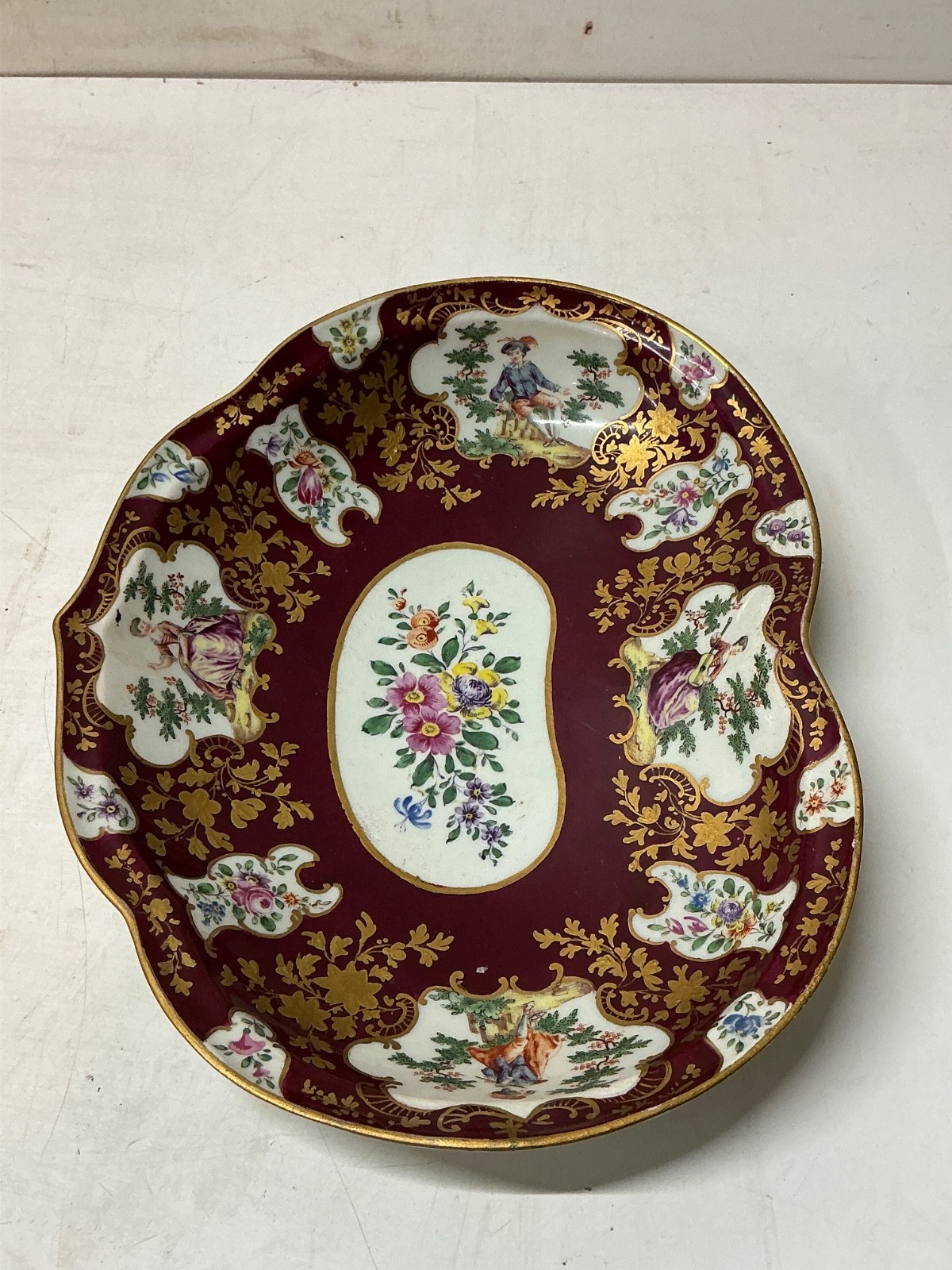
Offered here is an extraordinary museum-grade18th-century soft-paste porcelain kidney-shaped dessert dish, produced during Worcester’s covetedFirst Period (Dr. Wall Period) circa 1770. Boasting a spectacularclaret (maroon) ground, this exquisite 11-inch specimen features masterful, hand-painted panels executed in the celebrated London atelier ofJames Giles. Complete with impeccable, documented pedigree from two premier global porcelain collections, it represents a crowning achievement for advanced collectors of early British ceramics.
The James Giles Atelier & The Artisanal DecorationJames Giles (1718–1780) operated the premier independent decorating workshop in 18th-century London, located in Soho. Rather than purchasing fully decorated porcelain from the Worcester factory, Giles bought porcelain \"in the white\" (undecorated blanks) directly from Worcester and enameled them to order for the British aristocracy.The dish is a virtuoso display of Rococo grandeur. It is decorated with a rich claret border beautifully layered withciselé (chased) gold leaf scrollwork, diaper panels, and floral swags.The Reserves:Four distinct, reserve cartouches showcase meticulously hand-enameled pastoral courtier figures resting among European topiary trees—including a central elegant lady playing a baroque stringed instrument, and an opposing courtier playing a flute.
- The Center:The inner well contains a crisp white reserve brilliantly painted with a wet-brush bouquet of English garden florals (including prominent roses and tulips) surrounded by delicate scattered flower sprigs.
Identified works from the Giles workshop are highly sought after and preserved in major institutions like the Victoria and Albert Museum and the Boston Museum of Fine Arts.
The Peak of RarityIn 18th-century porcelain collecting,claret / maroon grounds are considered among the rarest and most fragile colors ever achieved. Developed by Worcester and independent decorator James Giles to rival therose Pompadourof Sèvres, the claret enamel was notoriously difficult to fire successfully. Due to the unstable chemistry of the ground, gold gilding applied on top frequently suffered from poor adhesion and flake-wear over the centuries. Finding an 11-inch kidney-shaped form with intact, vibrant courtier scenes and strong, bright gilding is incredibly uncommon. Most surviving pieces with this decoration reside permanently inside national museums.
Elite Provenance & LineageThe underside tells a complete story of ownership through two of the 20th century\'s most historically important porcelain collections:The Zorensky Collection (Green Sticker):Formed by Meyer and Jeanne Zorensky, this was widely heralded as the most exhaustive private collection of 18th-century Worcester ever formed, extensively documented in Simon Spero’s landmark literature.
- The Harris Masterson III Collection (White Label & Red Ink):Later acquired by legendary Houston oil philanthropists Harris Masterson III and Carroll Sterling Masterson. It bears their official estate inventory tag (No. 374) and hand-painted museum registration tracking numbers (Acc: 78.278.8). The bulk of this prestigious collection was bequeathed directly to the Museum of Fine Arts, Houston (MFAH) to furnish their European decorative arts wing,Rienzi.
Comprehensive Condition & Close-Up Photo BreakdownThis piece is offered in honest, unrestored antique condition with wear appropriate for a 250+ year-old ceramic specimen. Please carefully review the close-up images provided, which illustrate the character and honest age of this dish:
Original Kiln Firing Tear:Visible in the claret field to the left of the central bouquet is a narrow, tight internal body line. This is a factory-original firing separation common to early soft-paste soaprock porcelain where the clay naturally pulled apart in the kiln under extreme heat. It is entirely stable, does not extend through to the reverse side, and the dish still retains a clear, resonant ring when tapped.
- Claret Enamel Wear & Pitting:Close-up photos reveal minor pinhead-sized surface dings, natural firing glaze pits, and micro-flaking to the claret ground where the white porcelain substrate peeks through. The temperamental claret formula used by the James Giles atelier was notoriously unstable; this light surface pitting and expected stack-wear/rubbing is entirely standard for authentic period claret items.
- Gilt Edge Flea Bite:There is a minor, shallow pinhead-sized nick/flea bite to the interior (visible in photos).
The gilding remains extraordinarily bright, showcasing Giles\' iconic chased scrollwork. There are no professional restorations, overpainting, or hidden structural cracks. Price reflects these honest antique characteristics, as this is over 250+ years old.
See our other Dr. Wall pieces.
Keep in mind the shipping price also covers handling fees, packaging materials & time, not just postage.
See our store for thousands of our other items.
A22